
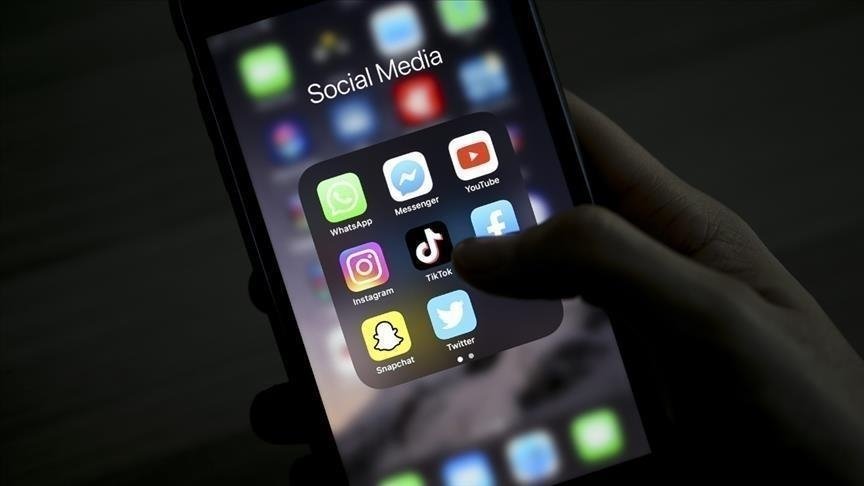
BEIJING: To limit the spreading of false information by an unprecedented measure, China has set a stern new regulation that requires social media users and influencers to show proof of their educational qualifications if they are to give advice in a specialized area such as law, medicine, economics, education, and finance.
The Cyberspace Administration of China (CAC) has recently brought in the new rules under which bystanders will be banned from expressing their views or giving professional help on certain topics without presenting verified credentials that include a duly recognized degree or a government-approved certificate showing expertise in the relevant field.
The legislation target to stop the phenomenon of illiterate online personalities in the future sharing of misleading or harmful information, which has been the dark side of social media in its rapid expansion.
The policies stipulate that only licensed experts are allowed to produce advisory content. Account-holders who offend the regulations will have their social media accounts suspended, and they will be fined the equivalent of 14,000 USD at most. Moreover, social networking sites are required to check the educational qualifications of the influencers before permitting them to provide expert commentary.
By adopting such a law, China is probably the pioneer globally in implementing the severe measures to eliminate misinformation by giving professional advice online only by authorized people.
YouTube warns against social media bans as a cure for online safety issues
YouTube, the video-sharing platform, has alerted the Australian government that the social media ban for children under 16 years it has planned to implement, though well-meant, will not be a good enough barrier against online risks for the young ones.
Last year, Australian PM Anthony Albanese unveiled a law that is to strictly prohibit children under 16 from using social media platforms by the end of 2025. Very heavy penalties of AUD 49.5 million (about USD 28 million) will be laid on platforms like Facebook, Instagram, TikTok, and others if they are found guilty of going against the prohibition.
YouTube, which is also affected by the law, claims that it is a video-sharing service and not a typical social media platform and thus should not be included in the legislation scope.
Rachel Lord, who is the Australian representative for YouTube, told the Senate committee that although the government’s intentions are good, the law could produce unfortunate negative results. She pointed out that the enforcement would be very hard to carry out and the ban would not facilitate the protection of children online.
Lord insisted that for legislation to be effective there has to be collaboration between the government and the industry to build a responsible online space. She pointed out that the answer is not to disconnect kids from the digital world but to teach them how to use the internet responsibly and safely.
Some experts have said that the government still has not answered how the ban will be practically enforced, particularly given that there is no dependable age verification system in place at present.
The government insists that the firms will not have to verify the age of every user but will need to take reasonable measures to locate and disable accounts of minors.