
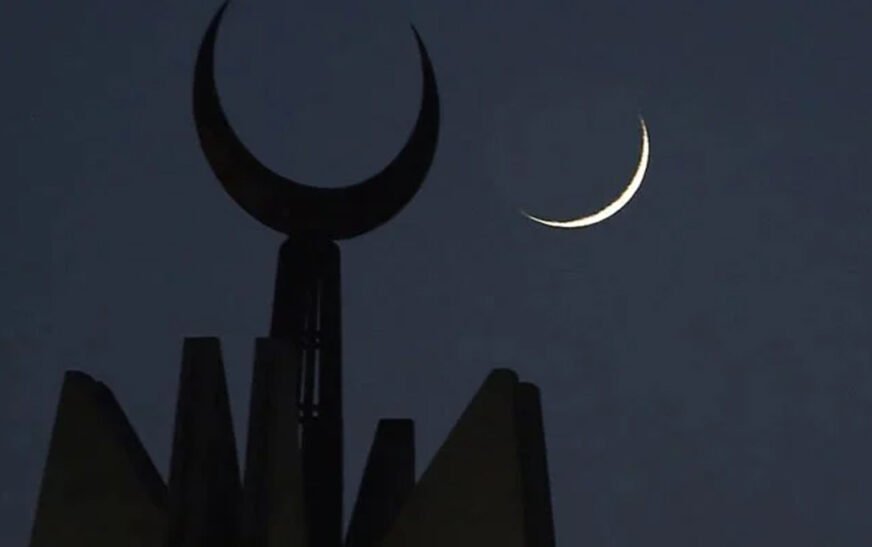
PESHAWAR: The Central Ruet-e-Hilal Committee and the relevant authorities will meet today in Peshawar to assess moon sighting reports, which will determine the start date of Ramadan.
The official committee will hold its meeting on the same day as a non-governmental moon-sighting committee. Both forums will carefully examine incoming reports, eyewitness accounts, and astronomical data to confirm the crescent moon’s visibility.
Preparations for the meeting have been completed, with the committee’s chairman and other members already in Peshawar. Special security arrangements have also been issued due to the importance of the session.
The Ministry of Religious Affairs and the Meteorological Department and SUPARCO and the Ministry of Science and Technology will send representatives to the meeting which is scheduled to take place at the main office of the Auqaf Department.
The official announcement of Ramadan’s start will be made after scientists evaluate the reports about lunar movements and eyewitness proof and astronomical data they have collected. This year shows early signs that Peshawar and the entire nation of Pakistan will reach a common agreement on fasting practices.
Road closures raise fears of food shortage in Peshawar
Meanwhile, the continuous closure of major highways in Peshawar created a land transport barrier that connects the city to other urban areas. This situation created concerns among residents about essential food supply shortages, which will occur before Ramzan.
The closed motorway and GT Road brought a fifth day of shutdown which obstructed goods delivery to the city. The delivery system for vegetables, fruits and essential daily goods experienced delays which led to public worries about potential food shortages at local shops.
The city experienced transport and trade system breakdowns because the closures created partial access restrictions to other districts and provinces.
Land routes that connect to different areas of Pakistan have become blocked which creates travel difficulties for people who need to reach their destinations. The journey from Peshawar to Rawalpindi now requires approximately nine hours to complete while the trip to Lahore needs about 22 hours to finish.
The disruption has also affected passengers. Residents who needed to travel used Pakistan Railways because all roads remained closed. All three trains that operate between Peshawar and Rawalpindi reached full capacity, leading to additional problems for people who needed to travel.
The sources reported that Peshawar lost its ability to connect with other provincial regions, resulting in decreased business operations and market instability. Traders have urged authorities to restore traffic flow as soon as possible to prevent further economic losses and supply shortages.