
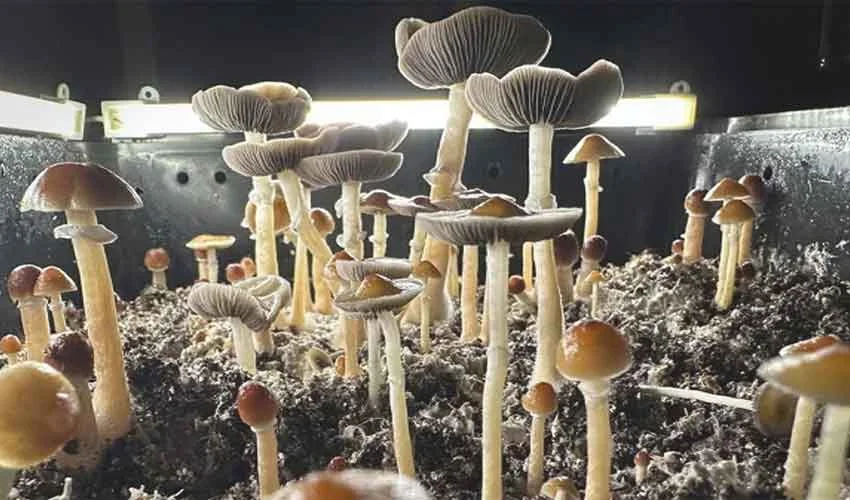
A compound found in magic mushrooms may help treat depression by reducing a specific type of brain activity linked to persistent negative thinking, according to a new study.
Depression affects millions of people worldwide and is marked by prolonged feelings of sadness or a loss of interest in daily activities over several weeks.
Standard treatments typically include psychotherapy and antidepressant medication, but these approaches are not effective for all patients.
Researchers have long struggled to fully explain why some individuals remain trapped in depressive states for extended periods.
In recent years, attention has turned to psilocybin, a naturally occurring compound in magic mushrooms, due to its observed antidepressant effects and its ability to produce lasting changes in brain activity after even a single dose.
A new study by scientists at Cornell University, published in the journal Cell, sheds light on how psilocybin may alleviate symptoms of depression.
The researchers found that the compound weakens a form of brain activity associated with rumination a process in which individuals become stuck in repetitive and negative thought patterns.
Rumination is one of the central features of depression, said lead author Alex Kwan, explaining that it often prevents patients from breaking free from cycles of negative thinking.
The findings add to growing scientific interest in the therapeutic potential of psychedelics, though researchers caution that further studies are needed before such treatments can be widely adopted in clinical practice.
Read also: Health experts issue stern warning over energy drink consumption