
PESHWAR: Special Assistant to the Chief Minister for Elementary and Secondary Education, Muhammad Asim Khan, has reaffirmed that there will be no compromise on merit and transparency in the Education Department. He stated that children’s education remains the top priority and the government is committed to introducing comprehensive reforms to prepare students for the challenges of the modern world.
He said that, along with providing quality education, modern technology and skills will be integrated into the education system, and efforts will be made to raise the standard of public schools to a level where students from private institutions would prefer to enrol in government schools.
The Special Assistant added that reforms will be introduced in the curriculum and teacher training programs, while merit-based systems will be implemented in educational boards through digitalisation. The government aims to eliminate the rote learning and cheating culture. The process of digital transformation in educational boards will make services easier and more transparent for students.
He also emphasised merit-based recruitment of teachers to address the shortage of teaching staff and ensure that allocated and released funds are effectively utilised for the completion of ongoing projects, initiation of new schemes, and provision of missing facilities in schools.
Muhammad Asim Khan stated that the role of the Education Monitoring Authority (EMA) will be further strengthened to ensure quality education monitoring, and disciplinary action under E&D Rules will be taken against negligent officials. A system of reward and punishment will be introduced—performers will be rewarded, while inefficient and negligent staff will face accountability.
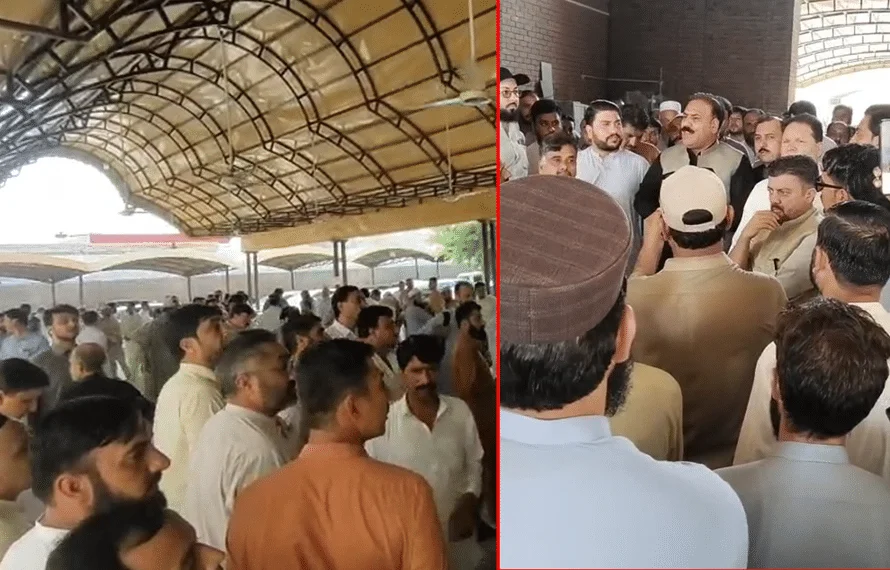
He expressed these views while chairing a briefing session of the Education Department and its attached institutions. The meeting was attended by Secretary of Education Muhammad Khalid, Special Secretaries Abdul Basit and Masood, DG EMA Suhail Khan, MD PSRA Iftikhar Marwat, Chairman Textbook Board Abidullah Kakakhel, MD ESEF Qaiser Alam, MD Merged Areas Education Foundation Fariha Paul, Director Education Naheed Anjum, Director DPD Muttahar, Director DCTE Mansoor, Chief Planning Officer Zainullah Shah, Education Advisor Mian Saaduddin, Director IT Salahuddin, and other senior officials.
The Special Assistant directed officials to prepare proposals within 10 days for utilising autonomy and PTC funds available in different district offices for the construction of additional classrooms and the provision of missing facilities in schools. He instructed them to set clear timelines to ensure no time is wasted and to align all departmental reforms with the provincial government’s Good Governance Roadmap and Vision.
He also directed that every subsidiary organisation of the department should prepare a reform-based briefing with clear implementation timelines. The Litigation Wing of the department should be made more effective to ensure justice and merit-based decisions.
Regarding madaris registration, the Special Assistant said it falls under the mandate of the Education Department, and a final plan should be devised in coordination with the Home and Industries Departments. He further instructed that open courts (Khuli Kacheris) initiated by the department be expanded to all districts and that issues identified during these sessions should be addressed promptly.
Muhammad Asim Khan also directed the Textbook Board to ensure that free textbooks are available to students on the first day of the academic year and that printing must be completed according to EMA and DEO reports without any unnecessary additional copies. He further instructed the ESEF to expedite work on online schooling, tele-education, POHA, and virtual classes, which he will inaugurate soon before extending the project to other districts.
He also ordered that new members be appointed for Model Schools whose board tenures have ended, and that unnecessary expenditures in these schools be minimised.
During the briefing, the Special Assistant was informed that there are 34,784 government schools, 3,556 girls’ community schools, 1,378 ALP centres, and 2,154 BECS and NCHD centres across the province. In addition, the department monitors 11,542 private schools.
Read also: KP government appoint seven PMS officers from different districts
Currently, around six million students are enrolled in government schools, 25,000 in community schools, 46,000 in ALP centres, 90,000 in BECS/NCHD centres, and three million in private schools. The province has 185,000 government teachers, 5,600 community school teachers, 1,378 ALP teachers, 2,700 BECS teachers, and 131,434 private school teachers. Moreover, 10 cadet colleges and 19 model schools are providing educational services under the department.
Officials also briefed that the total education budget for the province stands at Rs. 311.896 billion, including Rs. 51.863 billion for merged districts. The budget has seen an 11% increase this year, representing 21% of the province’s total budget.
There are currently 67 ongoing schemes—37 in settled districts, 14 in merged districts, and 16 under the AIP—with an allocation of Rs. 12.580 billion. Additionally, 29 new schemes have been approved, including 20 in settled districts, 4 in merged areas, and 5 under the AIP, with a total allocation of Rs. 7.37 billion. In total, there are 96 ongoing and new projects, with 29 new PC-1s, 9 of which have already been sent to the Planning Department.
It was also shared that Rs. 3,701 million have been released for settled districts, Rs. 736.61 million for merged districts, and Rs. 828 million for AIP projects. Additionally, a supplementary grant of Rs. 1 billion has been released both for settled and merged districts.