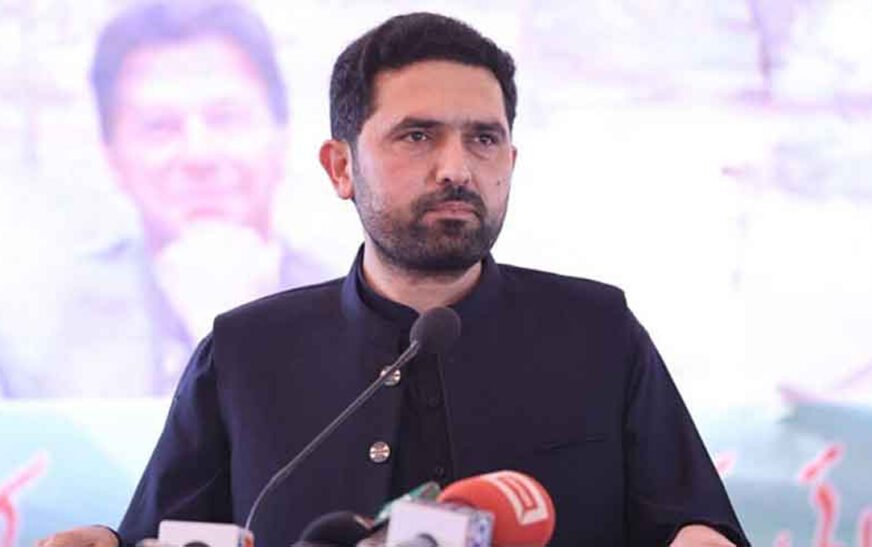


ISLAMABAD: Minister of State for Finance Bilal Azhar Kayani said that the Khyber Pakhtunkhwa government’s real challenges stem from governance inefficiency, lack of administrative focus and mismanagement rather than any financial shortfall.
While talking to a private news channel on Saturday, he dismissed the provincial government’s repeated accusations of being deprived of federal resources, saying these are made to divert attention from its own administrative failures.
He added that the KP government’s political priorities remain skewed toward confrontation with the federal government and allegiance to a single individual, instead of concentrating on public welfare and effective service delivery.
Kayani said the provincial government has repeatedly attempted to shift responsibility for its failures onto the federation, alleging that funds were withheld to cover up poor governance and under-performance.
“These claims are unfounded. The federal government has consistently released resources to KP, including the latest transfer on December 17, 2025,” he said.
From 2010 to November 2025, the federal government has transferred Rs 8,040 billion to KP, including Rs 5,867 billion under the NFC Award. Transfers have been made regularly every 15 days, ensuring timely provision of funds. He noted that KP has received its complete provincial share under the National Finance Commission (NFC) Award, with no arrears.
The minister added that on December 17, 2025, Rs 46.44 billion was disbursed to the provincial government under the NFC. In addition, the province has received a one percent additional allocation since 2010 due to the extra burden of terrorism, amounting to Rs 705 billion.
He further highlighted other key transfers, including oil and gas royalties, Rs 704 billion for merged districts since 2019, Rs 117 billion for internally displaced persons, along with other development funds and BISP allocations. “All these resources have been provided consistently, confirming that the federal government has fulfilled its obligations,” he said.
He concluded by urging the KP government to redirect its focus from political confrontation and individual agendas to effective governance, public welfare, and utilization of allocated resources. “It is imperative for the provincial government to concentrate on service delivery and developmental outcomes for the people, rather than continuing a narrative that undermines the state,” he added.