
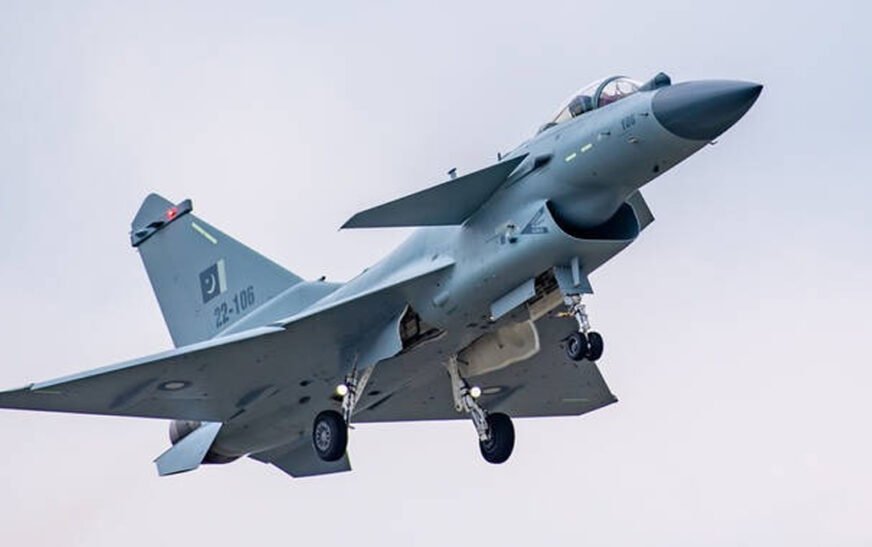
ISLAMABAD: A report coming from the state-run news agency Xinhua tells that the J-10CE fighter aircraft made in China has bagged its first win in the battleground during the military conflict that erupted in May 2025 between India and Pakistan.
The four-day fight involving the shooting of missiles, aerial fights, the use of drones, and heavy bombings took a toll of nearly 70 lives in total in the two countries. Pakistan declared itself the winner, claiming the Indian side lost six aircraft, including Rafael jets. India acknowledged the losses but did not give any numbers.
Xinhua, quoting the State Administration of Science, Technology and Industry for National Defense of China, said that J-10CE fighter was responsible for downing multiple planes during May air combat while there were no losses on the Chinese side. The agency did not name the countries involved.
“During the mid-May conflict, the J-10CE of China gained its first victory in combat, wiping out several aircraft and at the same time safely guarding itself,” the Xinhua report proclaimed.
Furthermore, the article pointed out that the victory of J-10CE in foreign skies is and demonstrates the power of China’s non-foreign military tech which it boasts about being at par with foreign ones.
The J-10CE is a fighter aircraft characterized by its ability to operate in all weathers and is also able to tackle multi-role tasks, created by China. The confrontation between India and Pakistan in May 2025 was the first time the aircraft was put to the test against the best of the West in a real war situation.
Despite the fact that China has not participated in a large-scale conflict for more than forty years, it is gradually transforming its armed forces through modernization under Xi Jinping’s leadership. One of the areas that have seen drastic change is the weaponry and military tech including that of China’s ally, Pakistan.
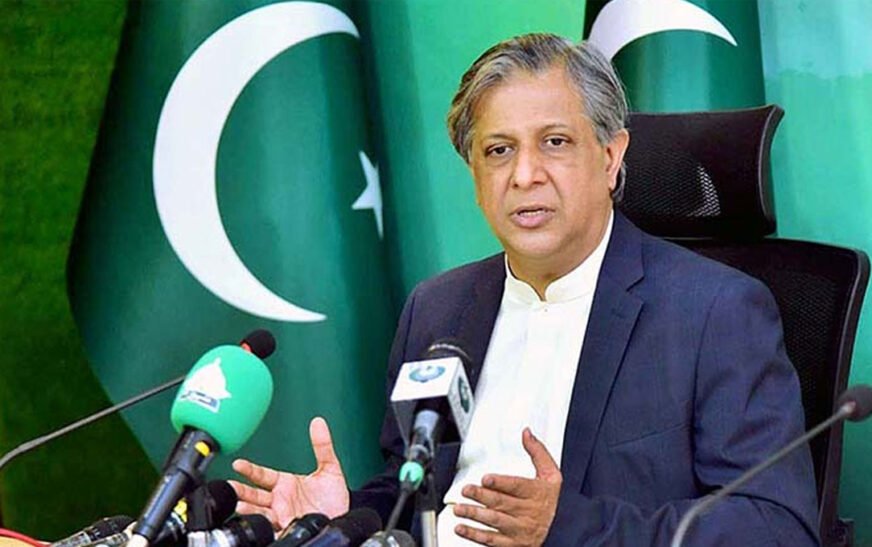
In response to the May standoff, Pakistan’s Defense Minister Khawaja Asif revealed this month that Islamabad has seen an increase in aircraft orders, which, if fulfilled, could reduce Pakistan’s reliance on the International Monetary Fund (IMF).
“We are receiving significant orders for aircraft after the May conflict because our aircraft have been tested in real combat,” Asif said in an interview with Pakistan’s Geo News channel. “If these orders materialize, we might not need the IMF in six months.”
Pakistan markets the JF-17 fighter jet, co-developed with China, as a cost-effective alternative to Western aircraft. The JF-17, which also participated in the May conflict, has been sold to countries like Azerbaijan and is part of a $4 billion weapons deal with Libya’s National Army. Additionally, Pakistan is exploring a potential defense agreement with Bangladesh that could include JF-17s and Super Mushshak training jets as relations with Dhaka improve.
ALSO READ: India’s request for Trump’s support in May 10 ceasefire revealed in FARA filing