
ISLAMABAD: The emerging regional alignments in South Asia and the Middle East, driven by new diplomatic engagements and defense partnerships, are now reigniting debates on the evolving regional security dynamics, with Pakistan expressing its concern over the emerging alignment between India and Israel, in addition to New Delhi’s growing engagement with Afghanistan.
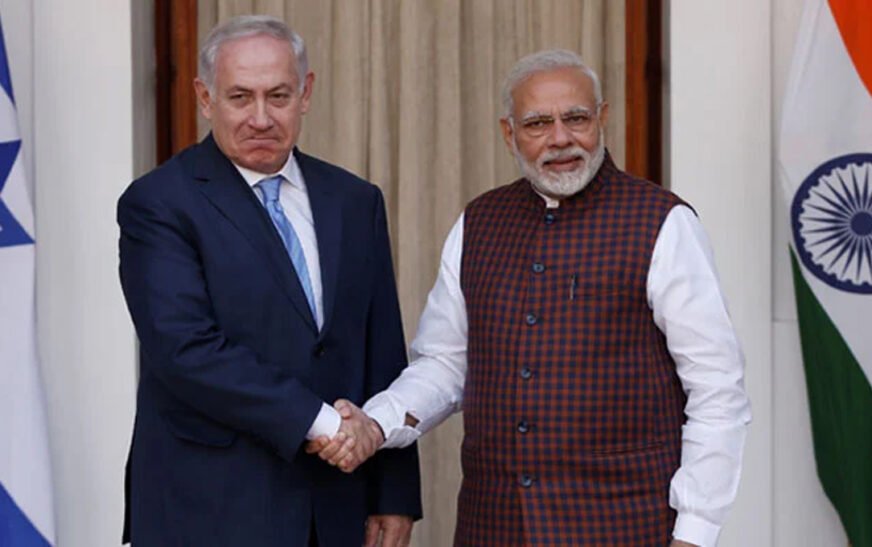
Indian policymakers have been working to enhance their defense and intelligence partnerships with Israel, with a focus on developing new-generation defense technologies, including drones and cyber warfare capabilities. Indian Prime Minister Narendra Modi has termed the partnership as one of the strategic cornerstones of the country’s national security architecture. Observers point out that Israel has emerged as one of India’s leading defense suppliers, reflecting an increasing convergence of strategic interests.
Meanwhile, India has been working to re-establish its diplomatic presence in Kabul after the Taliban’s return to power in 2021. While India has not yet recognized the Taliban’s administration in Afghanistan, it has been maintaining what it calls a “technical mission” in the country to monitor its humanitarian assistance and ensure the country’s long-term strategic interests.
The Pakistani government exercises cautious oversight of the advancing developments. Pakistani officials have repeatedly warned that Afghan territory must not be used for cross-border militancy. The people who make this claim believe that the developing regional partnerships will empower hostile groups which operate near Pakistan’s western border.
The two countries which possess nuclear weapons have experienced ongoing conflicts throughout their history. Pakistan has used the Kulbhushan Jadhav case which involved his 2016 arrest and India’s alleged interference according to Islamabad. India has denied those allegations while presenting its legal objections to the International Court of Justice which ordered Pakistan to let Jadhav meet with consular officials in 2019.
Indian officials dismiss claims of a coordinated anti-Pakistan axis, maintaining that their engagement with Israel is a bilateral defense partnership and that contacts with Kabul are focused on humanitarian and economic concerns. Security experts state that Pakistan has not been proven to have trilateral operational coordination against its enemies yet the current geopolitical situation has increased distrust in the region because of its already unstable conditions.
Analysts who study regional developments believe that South Asia will become more unstable because of mistaken beliefs and proxy warfare at a moment when Afghanistan endures both economic crises and governmental instability. The two countries require ongoing diplomatic dialogue with confidence-building activities to stop any potential escalation of their conflict.
The process of developing regional alliances will determine how security functions between deterrence and dialogue throughout the upcoming months in South Asia.