
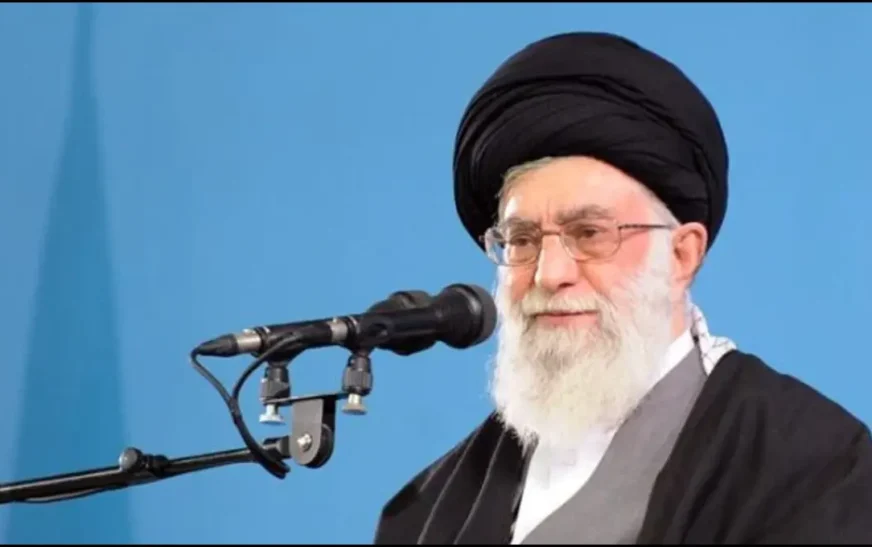
How do we know about Ayatollah Ali Khamenei, the guardian of Iranian revolution?
Ali Hosseini Khamenei (19 April 1939 – 28 February 2026) was an Iranian politician and Shia cleric who served as the supreme leader of Iran from 1989 until his assassination on Feb 28, 2026. He previously served as the president of Iran from 1981 to 1989. His tenure as supreme leader, spanning 36 years and six months, made him the longest-serving head of state in the Middle East at the time of his death and the longest-serving Iranian leader since Mohammad Reza Pahlavi.
Born into the Khamenei family, he studied at a Hawza in his hometown of Mashhad, later settling in Qom in 1958, where he attended the classes of Ruhollah Khomeini. Khamenei became involved in opposition to Mohammad Reza Pahlavi, the Shah of Iran, and was arrested six times before being exiled for three years by the Shah’s regime. Khamenei was a mainstream figure in the 1978–1979 Iranian Revolution, and upon its success, held many posts in the newly established Islamic Republic of Iran.
As an adolescent, he read widely in literature, poetry, and novels, became familiar with major works of Persian poetry, and began composing poetry himself at a young age. Khamenei characterized himself as having a strong memory and aptitude for literary criticism, stating that he could recall texts read in adolescence and that his critiques of poetry were often affirmed by poets and audiences. He described his childhood as marked by poverty, noting that his family lived in a poor neighbourhood of Mashhad, that his mother made clothes from his father’s old garments, and that they at times lacked sufficient food, relying on small amounts of raisins or milk purchased with minor sums given by relatives.
In the aftermath of the revolution, he was the target of an attempted assassination that paralysed his right arm. There had been continued assassination threats against Khamenei by Israel. Khamenei served as the third president of Iran from 1981 to 1989 during the Iran–Iraq War, when he also developed close ties to the Islamic Revolutionary Guard Corps (IRGC). After the death of Khomeini in 1989, Khamenei was elected supreme leader by the Assembly of Experts. As opposed to his predecessor, who held the position of Grand Ayatollah, Khamenei was only a middle ranking cleric, and not even an Ayatollah before his appointment. The position was achieved through the employment of state media, patronage networks, and the security apparatus.
As supreme leader, Khamenei supported Iran’s nuclear program for civilian use while issuing a fatwa forbidding the production of weapons of mass destruction. Khamenei favoured economic privatization of state-owned industries and, with oil and gas reserves, transformed Iran into an “energy superpower”. His foreign policy centred on Shia Islamism and exporting the Iranian Revolution. Khamenei played a pivotal role in the development of the IRGC, transforming it into a primary tool for domestic control and regional influence.
Under Khamenei, Iran supported the “Axis of Resistance” coalition in the Syrian civil war, War in Iraq, Yemeni civil war and the Gaza war, as well as Russia during the Russo-Ukrainian war. A staunch critic of Israel and of Zionism, Khamenei supported the Palestinians in the Israeli–Palestinian conflict. In 2025 and 2026, tensions with Israel and the United States escalated into the Twelve-Day War and an ongoing conflict, during which Khamenei was assassinated.
Identified as a pragmatic hardliner, Khamenei side-lined leftist factions, moderate clerics, and political dissidents, while occasionally easing restrictions when the regime’s stability or legitimacy had been threatened. His leadership had been closely associated with the expansion of state militarization and the consolidation of power within the office of the Supreme Leader.
Khamenei had also faced many protests, including in 1999, 2009, 2011–2012, 2017–2018, 2018–2019, 2019–2020, the Mahsa Amini protests in 2022–23, and 2025–26. Journalists, bloggers and other individuals were put on trial in Iran for the charges of insulting Supreme Leader Khamenei, often in conjunction with blasphemy charges. Their sentences included lashing and jail time; some of them died in custody. He was also known by the title Ayatollah and was considered one of the leading Shia Muslim Marja in the world.
Martyrdom of Ali Khamenei
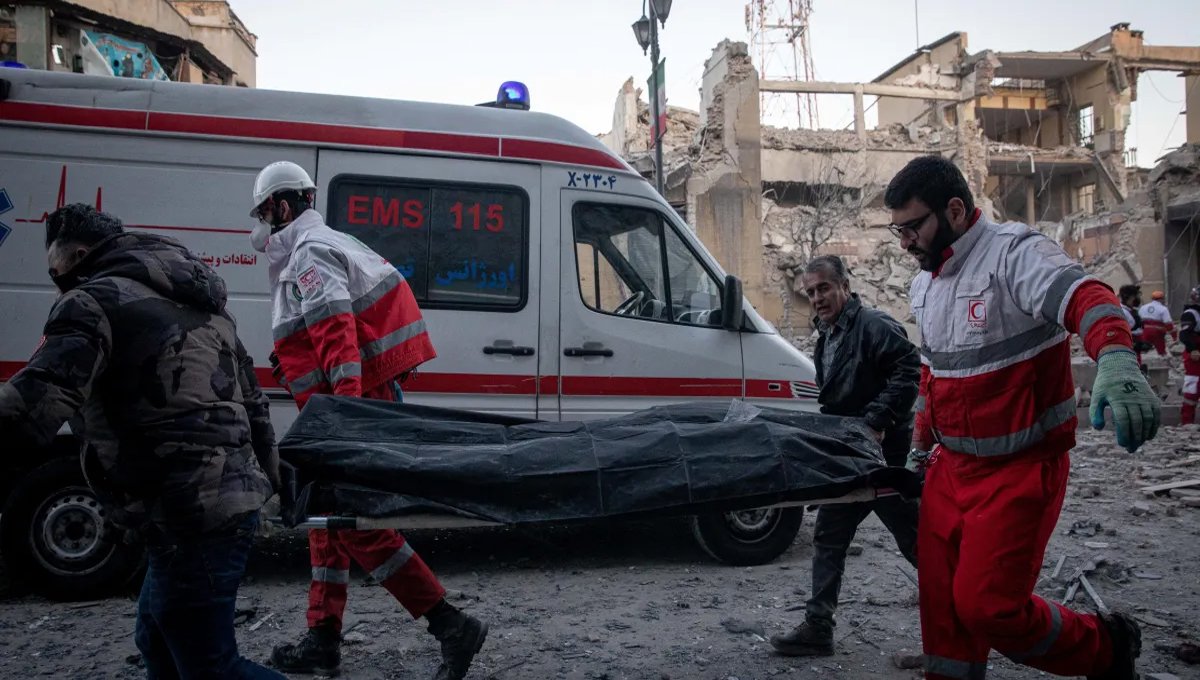
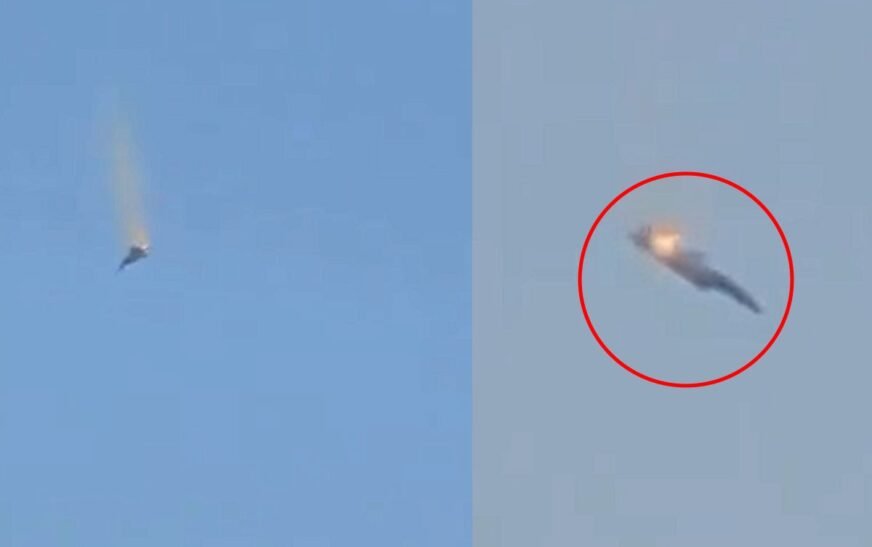
On 28 February 2026, Ali Khamenei, the supreme leader of Iran, was assassinated as part of a series of Israeli missile strikes around Tehran aimed at targeting high-ranking Iranian officials. Khamenei’s death was confirmed by the Iranian government on 1 March. His death occurred in a joint airstrike operation by the United States and Israel, using strategic locations intelligence from the US’s Central Intelligence Agency to determine the whereabouts of several leaders. Satellite imagery suggested that Khamenei’s residence in the city was severely damaged during the attack.
Following initial Israeli reports that Khamenei had been killed in the operation, US president Donald Trump and Israeli Prime Minister Benjamin Netanyahu stated that Khamenei was dead. After Iranian state media confirmed his death, the government announced 40 days of mourning and seven days of public holidays. The Fars News Agency announced that Khamenei’s daughter, son-in-law, grandchild, and daughter-in-law had also been killed in the strikes.
Read also: Iran state media confirms death of supreme leader Ayatollah Khamenei