
ISLAMABAD: The first solar eclipse of the year is expected to take place on the 17th of February, 2026. However, the event will not be witnessed in Pakistan and most Asian countries.
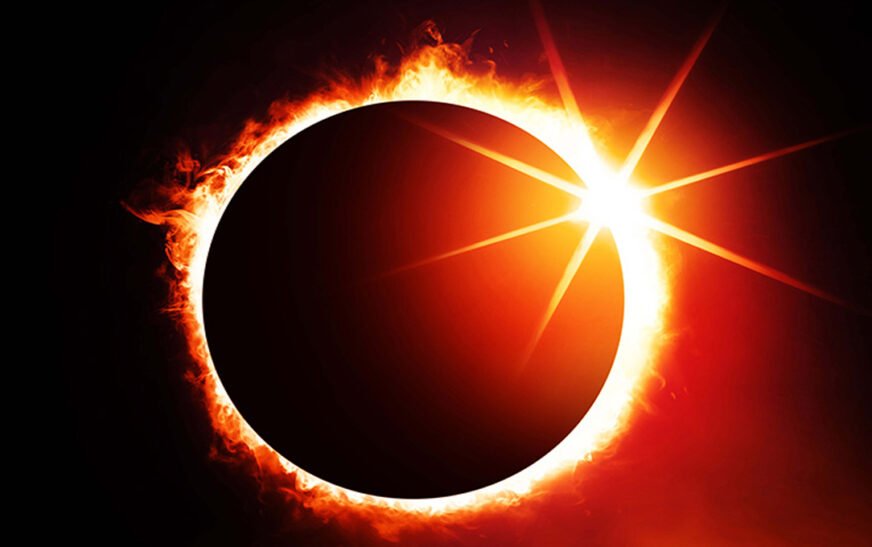
As astronomers will say, the Moon is to appear as if it is passing directly in front of the Sun. Incidentally, the Moon at that time would not be closely aligned to the Earth and hence would never completely cover the Sun. Instead, there will be the “ring of fire” effect surrounding the Sun.
The eclipse will reach its maximum point according to astronomy organizations, which predict the event will occur at 12:12 UTC. The eclipse will continue from 09:56 UTC until 14:27 UTC.
First supermoon of 2026 to be visible tonight
Earlier, Pakistan will experience its first supermoon of 2026 tonight. The supermoon will rise at 5:51 PM with an illumination of nearly 100 percent and will be clearly visible throughout the night, particularly around midnight.
The supermoon on January 3 will be the last in a cycle that began in October 2025 and will also mark the first supermoon of 2026. Supermoons occur when a full moon coincides with the Moon’s closest approach to Earth, making it appear larger and brighter than usual.
According to the national space agency SUPARCO, the January 3 supermoon, traditionally known as the Wolf Moon, marks the final supermoon of the ongoing cycle that began in October 2025, while simultaneously representing the first supermoon of 2026.
The supermoon will rise in Pakistan at 5:51 PM on January 3 and will remain visible on the nights of January 3 and January 4, with illumination reaching 99.8 percent. During this event, the Moon will be approximately 362,312 kilometers away from Earth, making it appear six to seven percent larger and up to ten percent brighter than a typical full moon.
The astronomical significance of this event is highlighted by its timing. The supermoon on January 3 coincides with the peak activity of the Quadrantid meteor shower occurring during the same period. SUPARCO noted that supermoons usually occur in clusters of three to four consecutive events, and this current cycle will conclude with Friday’s phenomenon.
The agency added that the next supermoon cycle will begin in November 2026, with no further supermoons expected until the end of that year.
ALSO READ: Second solar eclipse of the year tonight, invisible in Pakistan