
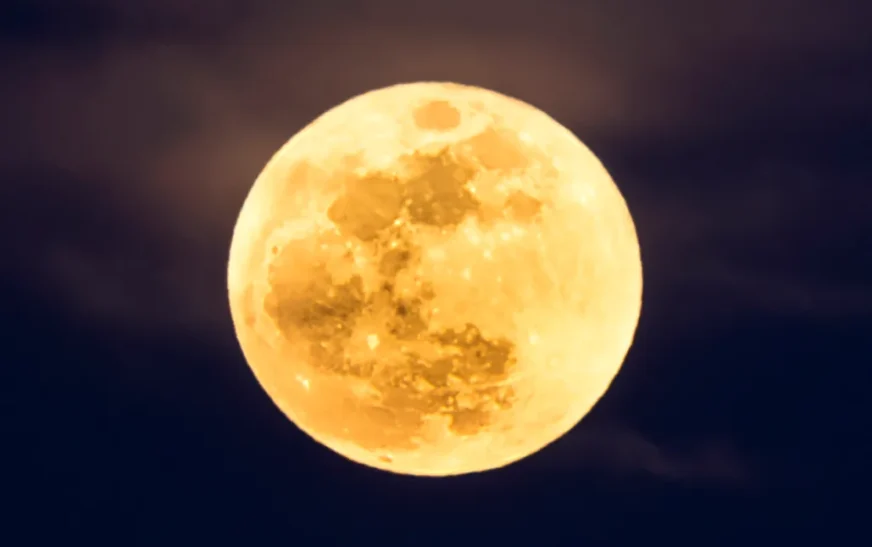
ISLAMABAD: The third and final Super Beaver Moon of 2025 will be visible today, which is a perfect thing for astronomy lovers to hear.
Scientists explain that the Super Beaver Moon will look 14% larger and 30% brighter than a usual full moon. The Moon will be at a distance of 221,817 miles from the Earth, so it will be approximately 2,800 miles closer than the Super Moon of October, which was also very clear.
In addition to Pakistan, the lunar event will be visible anywhere on the planet, therefore, a stunning experience for all skywatchers. On October 7, the Super Moon which was called “Harvest Super Moon” by astronomers also got the attention of a great number of people because of its brightness.
Astronomers remind people of the necessity of seeing this rare and lovely natural phenomenon and recording the closest approach of the Moon to Earth in 2025 in their pictures.
Astronomical surprise: Earth welcomes a mini-moon from space
NASA scientists not only confirmed this hypothesis but also found a celestial object that not only looks like the Moon but is also very near to Earth.
The US space agency discovered an asteroid named 2025 PN7, which possesses nearly the same characteristics of revolving around the Sun as that of Earth. The new body, close to the twin of the Moon, has been named “Half Moon” due to its timed orbital pattern.
More significantly, the news is that the asteroid is revolving around the Sun in coordination with the Earth so that its trajectory is practically identical to that of the Moon. If the scientists are correct, it seems to be dancing in harmony with Earth, and they predict that it will shadow our world until 2083, nearly 58 years from now.
The asteroid, correctly placed, is between 4 million kilometers from Earth and an extreme of 17 million kilometers at the other end.
ALSO READ: First supermoon to light up Pakistan’s sky on October 7
The diameter of the asteroid 2025 PN7 is predicted to be between 18 and 36 meters. NASA, however, has assured that the space rock poses no danger to the world.
Additionally, NASA said that it will be a milestone of finding other close space objects around Earth. Even though they cannot be directly observed and are considered non-threatening, finding out more about them can be a deciding factor for the defense system of Earth in the future.