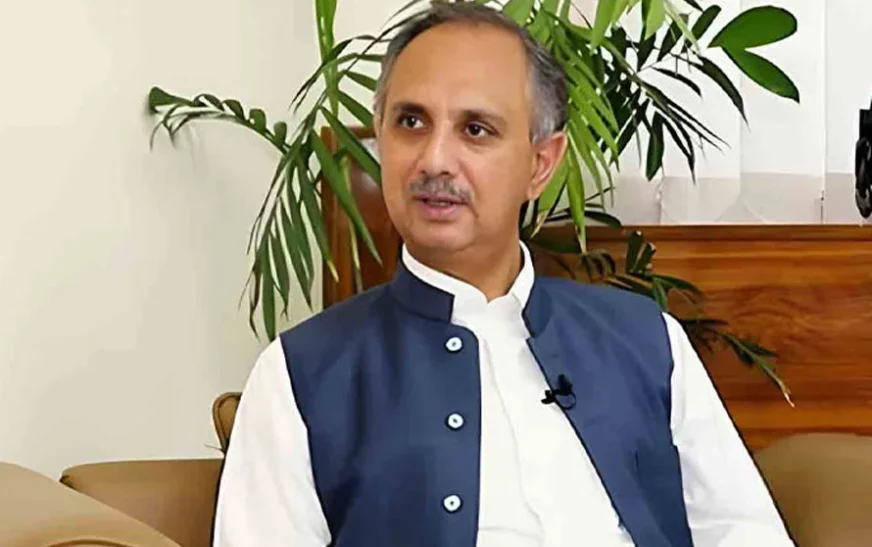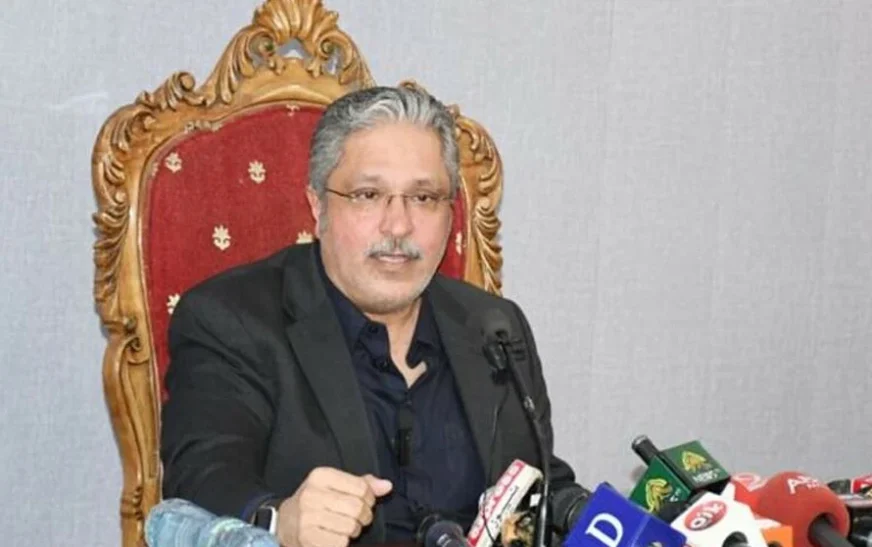


The Deputy Prime Minister and Foreign Minister of Pakistan, Mohammad Ishaq Dar, and the High Representative for Foreign Affairs and Security Policy and Vice-President of the European Commission, Kaja Kallas, co-chaired the seventh round of the EU-Pakistan Strategic Dialogue in Brussels today.
The Ministry of Foreign Affairs released a joint statement. Both sides expressed their commitment to further deepen collaboration across all areas of the SEP, aligning their overall strategic outlook. The meeting provided a platform to review EU-Pakistan bilateral relations, with particular focus on cooperation under the EU-Pakistan Strategic Engagement Plan (SEP) of 2019.
According to the joint statement during the dialogue, officials welcomed the timely convening of bilateral mechanisms and reaffirmed the importance of sustained cooperation across trade, migration, human rights, political, economic, and development areas, including initiatives under the EU’s Global Gateway strategy. They agreed to strengthen knowledge partnerships through Erasmus Mundus and Horizon Europe programs and to jointly address emerging challenges related to food and energy security and climate change.
The leaders also underscored the significance of sustainable growth and trade development, highlighting the Generalised Scheme of Preferences (GSP+) as a cornerstone of EU-Pakistan relations. HR/VP Kallas briefed on the ongoing process toward adopting a new GSP framework. Both sides reiterated their shared commitment to promoting and protecting human rights and fundamental freedoms in line with international obligations.
The dialogue further reaffirmed the commitment of both Pakistan and the European Union to multilateralism, the UN Charter, a rules-based international order, and global peace and stability. The discussions covered regional and global security, with the EU updating Pakistan on Russia’s war in Ukraine, while Pakistan briefed on the situation in Jammu and Kashmir. Both sides welcomed the first-phase agreement of the Comprehensive Plan to end the Gaza conflict, emphasizing adherence to the ceasefire, phased implementation, and the need for unimpeded humanitarian access, recovery, and reconstruction. They also reiterated support for a two-state solution based on relevant UN resolutions.
Regional security was another key focus. The ministers discussed Pakistan-Afghanistan relations following cross-border tensions in October 2025, stressing the importance of dialogue, peace, stability, and counter-terrorism efforts. Both sides called on Afghanistan’s de facto authorities to play a constructive role in achieving these objectives. Concerns were raised over Afghanistan’s socio-economic conditions, with both parties advocating for a peaceful, stable, and self-reliant Afghanistan through a credible UN-led political process, while emphasizing the protection of human rights, particularly for women, girls, and vulnerable populations. Pakistan’s longstanding role in hosting Afghan nationals was also acknowledged.
The two sides agreed to hold the eighth round of the Strategic Dialogue in Islamabad in the coming months.
Read also: European Union condemns suicide attack in Islamabad