
MARDAN (Shehzad Raja): Nestled within the Pulodhari Spinki area of Tehsil Rustam, a silent witness to the colonial engineering of the early 20th century is slowly crumbling into oblivion.
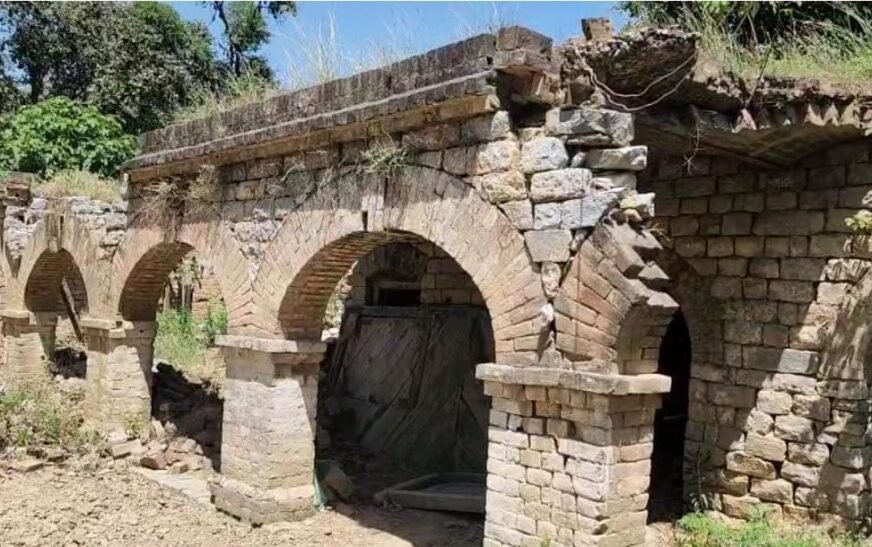
The historic British-era rest house, once a jewel of the Upper Swat Canal project, has transitioned from a symbol of architectural elegance to a skeletal ruin, now hauntingly referred to locally as the “Bat Bangla.”
The story of this structure begins in 1907, when the British administration embarked on the ambitious task of excavating the Upper Swat Canal. To facilitate the maintenance of the waterway and provide accommodation for touring officials, a string of 11 rest houses was constructed at strategic intervals along the canal’s path. The Pulodhari Spinki rest house was perhaps the most picturesque among them, celebrated for its unique architectural fusion and its placement amidst a lush, verdant landscape.
For decades following the birth of Pakistan in 1947, the building remained under the stewardship of the Irrigation Department. It served not merely as a functional residential facility for government officers but as a cultural landmark. Locals recall a time when the rest house was defined by its manicured lawns, sprawling shady trees, and the tranquil atmosphere provided by the flowing canal, a magnet for both weary travellers and local sightseers.
However, the passage of time has not been kind to this heritage site. A prolonged period of administrative apathy and a total lack of maintenance by the Irrigation Department have hollowed out the structure. Today, the roofs have caved in, deep fissures mark the masonry, and the once-vibrant gardens have been reclaimed by the wilderness. The “Bat Bangla” now stands as a stark monument to neglect rather than history.
“If this building had been restored in time, it could have been a premier tourist destination for Mardan,” lamented a local resident. “Instead, we are watching our history turn to dust. It is a loss for the future generations who will never know the significance of this place.”
Preservation experts suggest that these colonial-era rest houses across Khyber Pakhtunkhwa hold immense potential for heritage tourism. If restored under a cohesive provincial strategy, they could provide a sustainable revenue stream while safeguarding the region’s administrative history. For now, the Pulodhari Spinki rest house remains in a state of suspended decay, waiting for a restoration effort that may never come before the last of its walls succumb to the elements.