
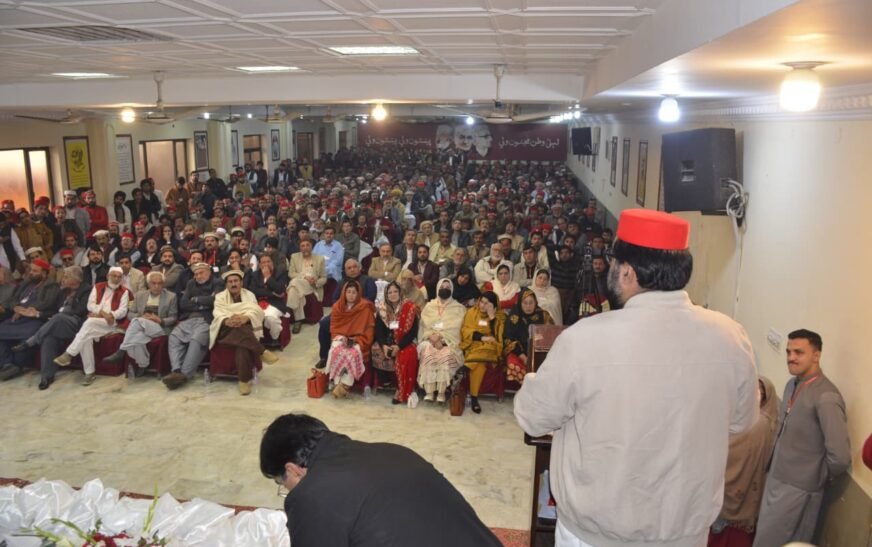
PESHAWAR: The Awami National Party (ANP) Central Council on Sunday approved amendments to the party’s constitution, key organisational reforms.
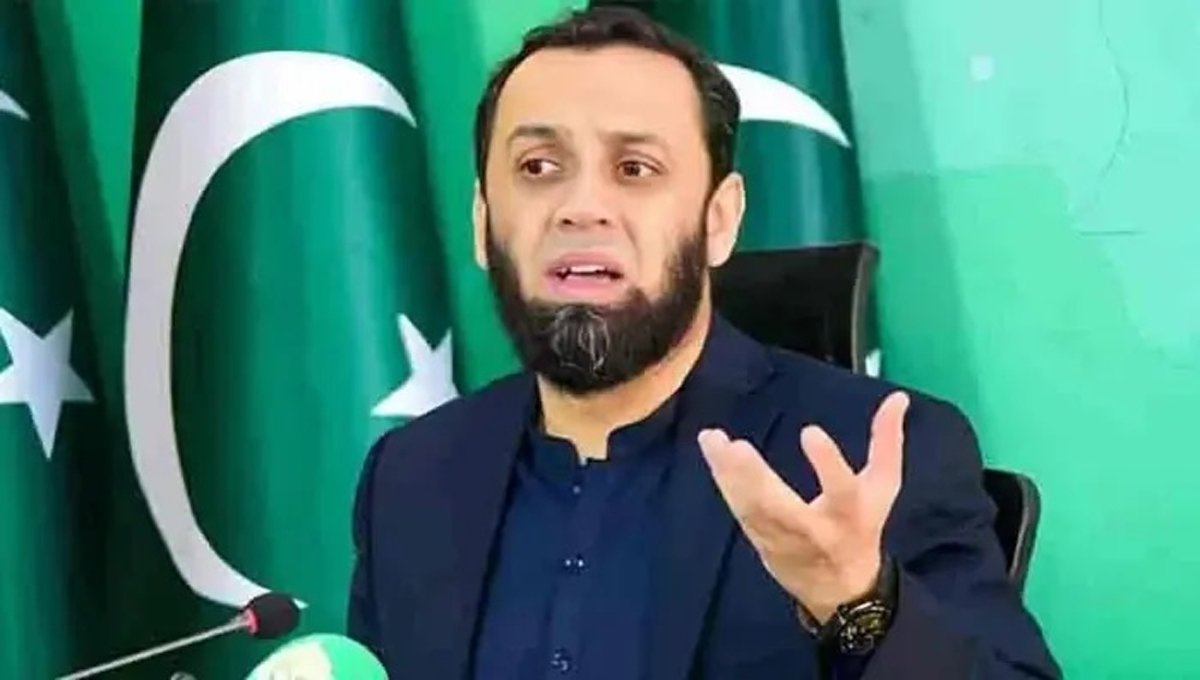
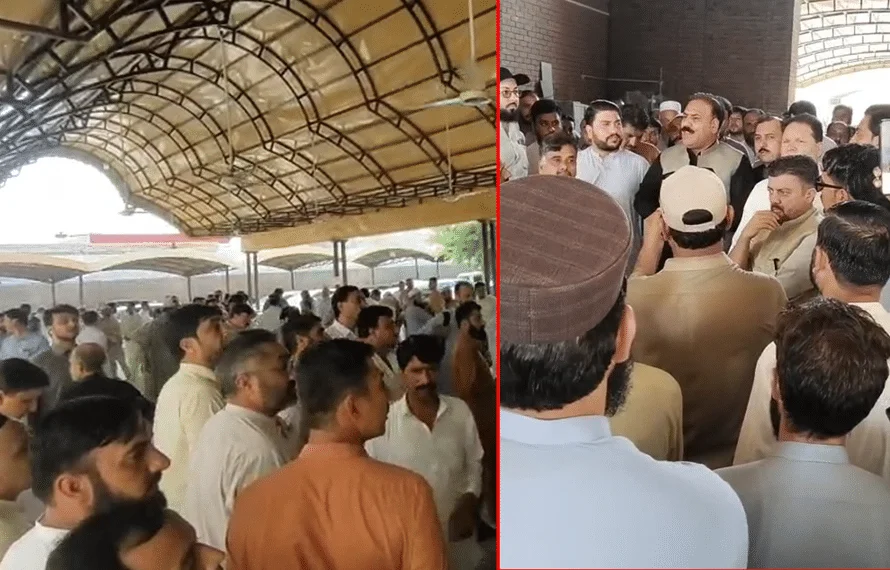
The Central Council meeting of the Awami National Party was held under the chairmanship of the party’s Central President Aimal Wali Khan at Bacha Khan Markaz, Peshawar, in which members of the Central Council from all over the country participated.
The meeting discussed the current political situation in the country, organisational matters and other important issues in detail. The meeting presented proposed amendments to the party constitution and important organisational reforms for approval, which were unanimously approved by the Central Council.
Similarly, several important resolutions were also unanimously approved in the light of the Awami National Party’s manifesto, Bacha Khan’s philosophy of non-violence, federal democracy, social justice and the principles of people’s sovereignty.
The Central Council expressed serious concern over the continuous undemocratic behaviour, political engineering and deviation from constitutional boundaries in the country, saying that these factors have severely damaged the balance between state institutions.
The unanimous position of the meeting was that the only way to get the country out of the crisis it is facing is the supremacy of the constitution, an independent and sovereign parliament and respect for the people’s mandate. The Central Council clarified that limiting the powers of the Parliament is actually an attack on the people’s right to rule, which will not be accepted under any circumstances.
The meeting warned all state institutions that deviation from the constitution, interference in political affairs and excess of powers are leading to state weakness. If any institution or individual exceeds the constitutional limits, they will be committing a clear violation of the constitution, which the Awami National Party completely rejects.
The Central Council expressed deep concern over the ongoing terrorism, target killings, bomb blasts and overall insecurity in Khyber Pakhtunkhwa and Balochistan, saying that the people of these provinces are continuously bearing the brunt of the failed policies of the state.
The meeting demanded that all stakeholders be taken into confidence in the formulation of any policy against terrorism and that the issue be resolved not only in a security but also in a political, economic and social context. The Central Council strongly condemned the administrative failure, corruption, incompetence and deliberate neglect of public issues in Khyber Pakhtunkhwa province, rejected the policy of making the province a laboratory and demanded a transparent, accountable and people-friendly governance.
The Central Council stressed the need to finalise the establishment of the judicial commission announced to investigate the martyrdom of ANP’s martyred leader, Maulana Khanzeb and demanded that the Chief Justice immediately announce a senior judge for the commission so that a transparent investigation into the incident can be conducted promptly and the involved characters can be brought to light.
The Central Council clearly announced that the Eighteenth Constitutional Amendment is the foundation of the democratic structure of the Federation of Pakistan and Pakistan and the Eighteenth Amendment is inseparable from the other. Terming any attempt to roll it back as an anti-people conspiracy, it was said that the Awami National Party will strongly resist any such attempt.
The meeting demanded that all the dues of Khyber Pakhtunkhwa to the centre in terms of net profits of electricity, gas, oil and hydropower be paid immediately and in full, while the provincial government was directed to play an effective role in achieving these dues and the rights of the province.
The Central Council strongly condemned the delay in issuing the NFC award, terming it a constitutional violation and demanded the immediate issuance of a fair new NFC award. The meeting expressed serious concern over the non-fulfilment of the promises made to the merged districts under the 25th Constitutional Amendment. Despite the passage of seven years, the non-fulfilment of constitutional, financial and development promises is a question mark on the reputation of the state.
The Central Council rejected this practice and demanded the full implementation of the Sartaj Aziz Commission. The Central Council strongly rejected the resolution of the Khyber Pakhtunkhwa Assembly to establish the Hazara province and demanded that new provinces be established on the basis of nationalities and a representative unit of Pakhtuns be formed from Chaman to Waziristan and Chitral.
The meeting condemned the discrimination against mother tongues at the state level and demanded that all mother tongues, including Pashto, be included as a compulsory subject in the curriculum under the 18th Constitutional Amendment.
It also strongly rejected the closure of Pashto broadcasts on Pakistan Television and demanded their immediate restoration and extension of their duration. The Central Council emphasised that democracy cannot be complete without devolution of powers, resources and decision-making to the grassroots level, and demanded the immediate implementation of a genuine local government system across the country.
The meeting expressed serious concern over the financial distress, non-payment of salaries to teachers and employees and the administrative crisis in the universities of Khyber Pakhtunkhwa and demanded immediate steps for a permanent solution to the problems of all universities. The militarisation of educational institutions in the name of security was also completely rejected.
The Central Council called for immediate elections, calling the restoration of student unions across the country indispensable for democratic training and the promotion of leadership. Declaring freedom of expression as a fundamental part of the party manifesto, the party strongly condemned the policies of unannounced censorship of the media, pressure on journalists and punishment of expression of opinion.
The meeting rejected the serious human rights violations, restrictions on civil liberties, false cases against political and social activists and the practice of including respected citizens in Schedule IV on political grounds across the country, including Khyber Pakhtunkhwa and Balochistan and demanded immediate reforms. The Central Council declared extrajudicial killings and enforced disappearances as serious crimes.