
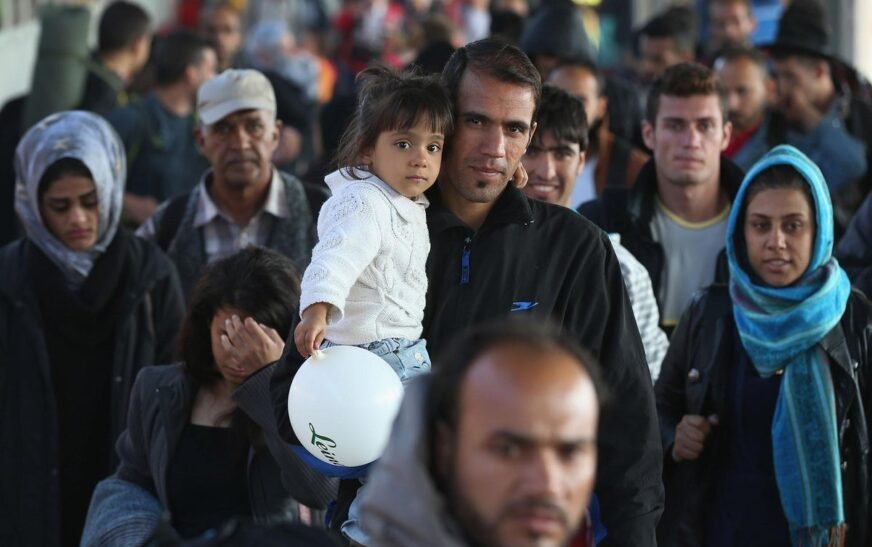
PESHAWAR: The federal Ministry of Interior has sought details of the legal procedures governing the arrest, detention and deportation of undocumented Afghan nationals, asking the Home Secretary of Khyber Pakhtunkhwa (KP) to provide information on the laws, legal provisions and authorities involved in the process.
In a letter to the KP government, the ministry asked which laws, acts, rules and regulations are being used to arrest, detain and deport undocumented Afghan nationals, and under what legal powers police and other law enforcement agencies are carrying out these operations.
The ministry has also sought details of the authorities legally empowered to arrest, detain and deport Afghan nationals. The provincial government has been directed to provide copies of relevant official notifications, orders and instructions under which the actions are being carried out.
In addition, the Ministry of Interior has requested standard operating procedures (SOPs) adopted by federal and provincial governments for operations under the Illegal Foreigners Repatriation Plan (IFRP). It has also sought details of safeguards and measures put in place to ensure compliance with legal requirements during the process.
According to the letter, the federal government intends to conduct a comprehensive review of the legal framework governing the repatriation of Afghan nationals.
The provincial government has been asked to provide the relevant laws, legal provisions and supporting documents at the earliest to help clarify the legal basis and procedures for the ongoing actions against undocumented Afghan nationals.
READ ALSO: PHC Issues Key Order in Afghan Female Medical Students Case
The Peshawar High Court has stopped the deportation of eight Afghan female medical students of Ayub Medical College Abbottabad and allowed them to continue their house jobs, while seeking responses from the relevant authorities.
A divisional bench comprising Justice Ijaz Anwar and Justice Farah Jamshed issued the orders while hearing a petition challenging the cancellation of the students’ house jobs and the threat of deportation.
During the hearing, Ibrahim Noor Mughal Advocate, representing the petitioners, informed the court that the Afghan students had received their medical education in Pakistan and had started their mandatory house jobs at Ayub Teaching Hospital after completing their academic studies.