

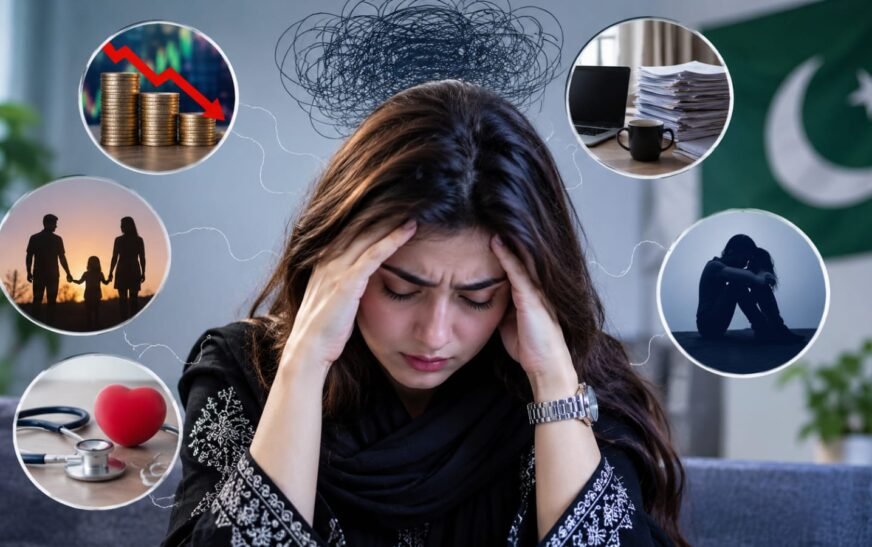
Family-related problems have emerged as the leading cause of mental stress among Pakistanis, while economic conditions and employment-related concerns rank among the major sources of anxiety worldwide, according to a new Gallup Pakistan survey.
The survey highlights a significant difference between the factors contributing to mental stress in Pakistan and those reported by people globally.
According to the findings, 29 per cent of Pakistanis identified family-related pressure as their biggest source of stress.
Unemployment ranked second, with 22 per cent of respondents identifying it as a major concern, while 21 per cent cited debt repayments and financial difficulties.
Meanwhile, 16 per cent said their current jobs were a source of stress, while 13 per cent identified health-related problems as a major cause of mental pressure.
The findings showed a different pattern at the global level, where family-related stress ranked third among the major causes of anxiety.
Health concerns topped the global list, with 28 per cent of respondents identifying them as a major source of stress.
Political conditions in their respective countries ranked second at 18 per cent, followed by unemployment at 15 per cent.
Meanwhile, 14 per cent of respondents worldwide identified international wars as a source of mental stress.
The survey also revealed that political conditions were a relatively minor source of anxiety in Pakistan, with only four per cent of respondents identifying them as a cause of stress. Similarly, just two per cent cited international wars as a source of mental pressure.
The findings highlight how family responsibilities and financial challenges play a significant role in shaping the mental well-being of people in Pakistan, while health and geopolitical concerns feature more prominently in global responses.
READ ALSO: Is your diet affecting your mental health? Experts point to a common food
Ultra-processed foods have long been associated with a higher risk of physical health problems, but new research suggests they may also have a significant impact on mental health.
A study conducted by researchers at Harvard Medical School and Massachusetts General Hospital found that regular consumption of ultra-processed foods particularly artificially sweetened beverages may substantially increase the risk of developing depression.
The study analyzed the dietary habits and mental health of more than 30,000 middle-aged women who had no history of depression at the beginning of the research. Participants were followed between 2003 and 2017 to examine the relationship between their eating habits and the onset of depression.