

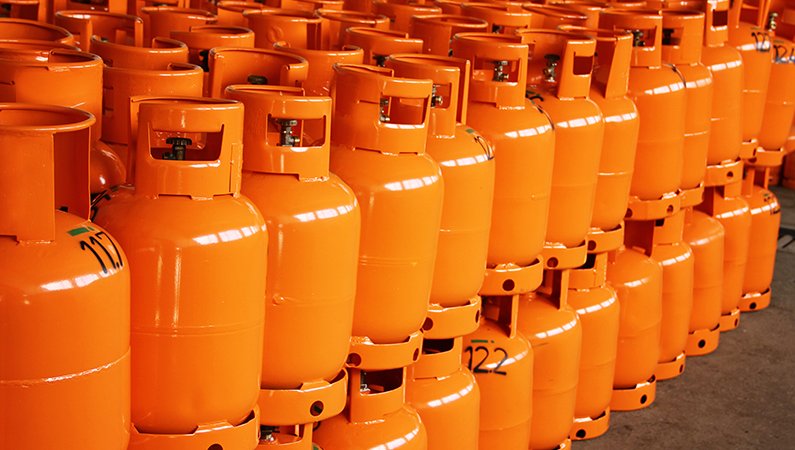
ISLAMABAD: A massive hike in the prices of Liquefied Petroleum Gas has triggered widespread public outrage across Pakistan, as consumers are being forced to buy LPG at rates more than double the official government price ahead of the winter season.
According to the notification issued by the Oil and Gas Regulatory Authority, the official LPG price for the month of November has been increased to Rs294,075 per tonne, up from Rs279,341 per tonne in October. After this increase, the official retail price of an 11.8 kg domestic LPG cylinder has gone up by Rs173 to Rs3,470, while the official rate per kilogram has reached Rs294, with an increase of Rs14.73 per kg. OGRA said the increase was due to a 6.47 percent rise in Saudi Aramco contract price, while the average dollar exchange rate declined slightly by 0.12 percent.
However, in the open market, the situation is far worse than the official notification. LPG is being sold for up to Rs630 per kg in different cities, while company-operated franchises are charging up to Rs400 per kg. In Lahore, LPG is selling between Rs600 and Rs650 per kg, while in small towns and rural areas of Punjab, the price has reached Rs700 per kg. In some areas, consumers have reported paying Rs600, Rs700 and even Rs800 per kg. At Rs600 per kg, a domestic cylinder costs more than Rs7,000, which is double the official price of Rs3,470. This huge gap between the official rate and the market rate has raised serious questions about the ability of the government and district administrations to enforce their own notified prices.
The public outrage is growing because LPG has become essential for millions of households, especially in areas where Sui gas and RLNG is available only for a few hours a day, mostly during cooking hours. In Rawalpindi, families are returning to firewood, coal and kerosene to keep their kitchens running as winter approaches. According to reports, a new domestic cylinder is selling for Rs13,500 in the open market compared to Rs10,000 earlier, while refill charges have risen from Rs3,000 to Rs5,000, and commercial cylinder refills have nearly doubled to Rs25,000. In Lahore, rickshaw drivers, domestic consumers and civil society representatives staged a protest at Liberty Chowk, demanding availability of LPG at officially prescribed rates. The protesters questioned the performance of the district administration, price control committees and enforcement authorities, and urged the Punjab Chief Minister to take immediate action against hoarding, overpricing and black marketing.
In Hyderabad, Sindh Assembly members also condemned the increase in LPG prices at a joint press conference. They said that although winter had yet to begin, LPG was being sold at Rs550 to Rs650 per kg against the official rate, and the civil administration had failed to curb overpricing. They alleged that LPG outlet owners were selling at exorbitant rates because officials concerned were taking money from them, which had multiplied the economic miseries of consumers. In Lahore, LPG retailers and wholesalers also staged a protest, saying they were being forced to buy gas at high wholesale rates while facing heavy fines and confiscation of equipment by enforcement authorities. Many shops and cylinder refilling outlets in Lahore were shut down due to shortage and strike, forcing citizens to rely on firewood and coal.
The LPG Distributors Association of Pakistan has described the situation as very serious because of the closure of the Iran border due to the US-Iran war. Chairman Irfan Khokhar said that approximately 70 percent of the country’s LPG supplies were imported from Iran, while only 30 percent were produced domestically. He said Pakistan’s daily LPG consumption is estimated at approximately 7,000 metric tonnes, which increases significantly during winter, while domestic production meets only around 2,000 metric tonnes of this requirement, leaving the country heavily dependent on imports, particularly supplies originating from Iran. The government has failed to establish adequate strategic reserves, storage facilities and diversified import arrangements to deal with such supply disruptions.
Political reaction has also intensified. Pakistan Tehreek-e-Insaf Central Secretary Information Sheikh Waqas Akram slammed the unprecedented hike in LPG prices and demanded an independent forensic investigation into alleged profiteering. He called for imposition of windfall tax on extraordinary corporate gains, recovery of unlawfully collected amounts and accountability for the government’s failure to protect millions of consumers. He asked who is collecting the extraordinary difference between the official rate of Rs294 and the market rate of Rs600 to Rs800, who is benefiting from the shortage, and why the government has failed to protect ordinary consumers.
Meanwhile, LPG marketing companies have threatened to shut down their businesses from November 16 if the private sector is sidelined in the upcoming LPG policy. Pakistan LPG Marketers Association Chairman Ali Haider warned that companies would observe a strike from November 16 if the proposed policy was implemented without consultation. He said the new mechanism would push LPG prices up by 25 to 30 percent, which would add roughly Rs870 to Rs1,040 per cylinder, taking it to about Rs4,340 to Rs4,510. The Petroleum Division has proposed replacing the current cap based on Saudi Aramco Contract Price with a benchmark linked to Pakistan State Oil’s landed import cost. Prime Minister Shehbaz Sharif has already formed a ministerial committee to review the proposed LPG policy changes after the industry protested.
Consumers have called on the government and relevant regulatory authorities to move beyond issuing price notifications and take effective action to ensure compliance in the market. They say that issuing a notification has no benefit if LPG is not available in the market at the announced rate. The public is demanding immediate notice of the shortage, ensuring adequate supplies, investigating alleged overpricing and launching strict action against those found exploiting the crisis, particularly before the severe winter season begins.





2 Comments
[…] READ ALSO: Massive Hike in LPG Prices Causes Public Outrage Across Pakistan […]
[…] across Khyber Pakhtunkhwa (KP), including Peshawar, are facing difficulties as the price of liquefied petroleum gas (LPG) has surged to Rs600–700 per […]