

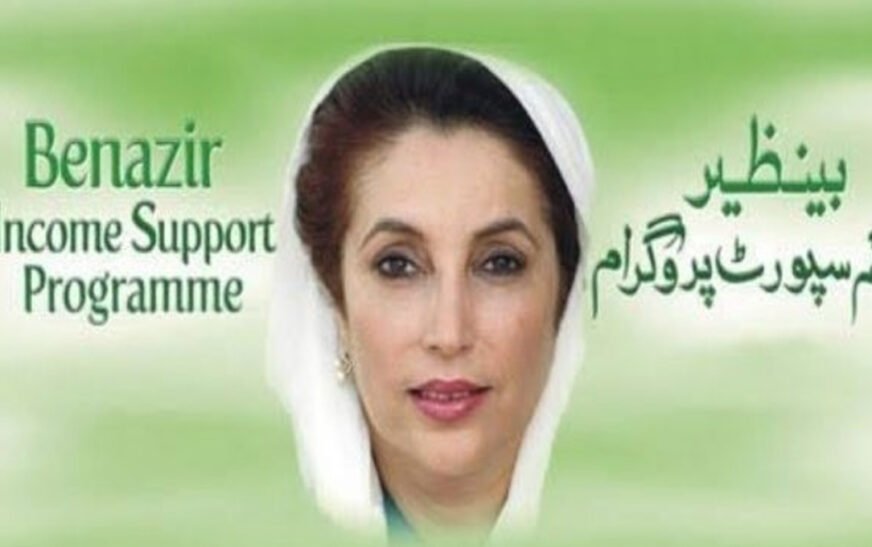
ISLAMABAD: A wrong and flawed survey of the Benazir Income Support Programme has caused a massive loss of billions of rupees to the national exchequer, according to the latest audit report. The audit of BISP for the fiscal year 2024-25 has exposed serious weaknesses in profiling, data management, survey verification and regulatory controls. The report says that due to the wrong Poverty Scorecard Survey and weak Management Information System, ineligible and ghost beneficiaries continued to receive taxpayers money for years.
The Audit Report 2026 says that irregular payments were made to more than 601,850 ineligible beneficiaries, involving financial issues exceeding Rs25 billion. The audit team declared the survey process as unreliable because spouse data was not properly profiled, PMT scores were duplicated, vehicle ownership, government jobs and pension data were not cross-checked with NADRA, FBR and other departments, and same CNICs were used for multiple beneficiaries.
Despite a clear Federal Cabinet decision on December 24, 2019, which excluded all government employees and their spouses from BISP, payments continued. The audit found that BISP paid Rs515.712 million under its Unconditional Cash Transfer programme to 12,078 government employees, pensioners and their spouses. This included Rs25.20 million paid to 673 serving government employees in grades 1 to 16, Rs402.80 million paid to 9,124 spouses of government employees in grades 1 to 16, Rs2.54 million paid to spouses of employees in grades 17 to 20, Rs74.16 million paid to 1,847 pensioners and their spouses in grades 1 to 16, and Rs2.81 million paid to spouses of pensioners in grades 17 to 20.
The most serious finding is related to the wrong survey data. In 5,558 cases, one single spouse CNIC was linked with up to seven different female beneficiaries, involving Rs239 million. In 596,252 cases, beneficiaries had no spouse CNIC recorded at all, involving disbursements of Rs25.45 billion. In 97,179 cases, the system allowed multiple PMT scores against the same Head of Household, which led to irregular enrolment of 18,964 beneficiaries with a misallocation of Rs533.536 million. The audit observed that the system had no automatic block for duplicate entries, which allowed ineligible people to stay in the programme.
The audit also found that 1,719 beneficiaries who owned vehicles above the prescribed threshold received Rs69.744 million. Under BISP rules, a family owning a car or vehicle is considered non-poor and is not eligible for financial assistance.
This is not the first time such irregularities have been found. Earlier investigations by NADRA, BISP, Ministry of Finance and FIA had found 125,714 ghost beneficiaries who bagged over Rs3.3 billion from 2012 to 2015. Province-wise, 55,772 ghost beneficiaries were identified in Sindh, 43,680 in Punjab, 13,719 in Khyber Pakhtunkhwa, 6,675 in Balochistan, 2,631 in FATA, 1,881 in Azad Jammu and Kashmir, 1,050 in Gilgit-Baltistan and 314 in Islamabad. Officials said the ghost entries were created due to wrong manual updates in the survey.
In the National Assembly, it was disclosed that between July 1, 2025 to June 30, 2026, BISP removed over 2.25 million beneficiaries from its database and halted payments to more than 800,000 others. Officials have so far recovered over Rs712 million from fraudulent and ineligible recipients, including Rs545 million through FIA and Rs21 million from BISP staff itself. The Ministry also received 55,579 complaints last year involving unauthorized deductions, embezzlement and misuse of beneficiary funds by agents and middlemen.
After the audit observations, the Departmental Accounts Committee has directed authorities to immediately block all identified ineligible beneficiaries, initiate recovery of the irregularly paid amounts, fix the BISP MIS to stop duplicate CNIC and PMT entries, complete re-verification through NADRA data, and take disciplinary action against responsible officials.
BISP is Pakistan’s largest social safety net with an annual budget of over Rs800 billion. It is meant to support low-income, widows, disabled and vulnerable families. Experts say that due to wrong survey, genuine poor families are deprived, while ineligible people take their share. This not only causes loss to the national exchequer but also damages public trust in the programme. The BISP management has said that after the new dynamic survey and digital verification, the system is being cleaned and in future, payments will be linked directly to NADRA and banking data to avoid fraud.
Read also:BISP Opens 197 Job Opportunities: Who Can Apply and How?











1 Comment
[…] READ ALSO: Wrong Survey of BISP Causes Billions in Loss to National Exchequer […]