
The pine-covered hills of Balakot in Mansehra still carry the echoes of gunfire from 200 years ago. It was here, on 6th May 1831, that one of the most defining battles of Muslim resistance in the Indian subcontinent was fought — the Battle of Balakot.
Who Was Syed Ahmad Shaheed?
Born in 1786 in Rae Bareli, Syed Ahmad was not just a religious scholar. He was a movement leader who wanted to rid Indian Muslims of un-Islamic practices, foreign domination, and internal decay. Inspired by Shah Waliullah’s vision, he launched a jihad movement aimed at establishing a society based on Quran and Sunnah.
By 1826 he had moved his base to the northwest — to the tribal areas of Peshawar and Hazara. His goal was simple: use this frontier as a base to challenge Sikh rule in Punjab and Kashmir, and to create a model Islamic state.
Thousands of Mujahideen from across India joined him. Peasants, scholars, and tribesmen pledged allegiance. For the Sikhs under Maharaja Ranjit Singh, this was a direct threat.
The Road to BalakotIn 1830, Syed Ahmad’s forces briefly took control of Peshawar. But internal tribal politics and lack of sustained support forced a retreat into the mountains. The Sikhs, led by General Sher Singh, pursued him. The final confrontation was set in the small town of Balakot, a strategic valley surrounded by mountains, 20km from Mansehra. The Sikh army was better equipped, better trained, and far larger. Syed Ahmad’s force numbered around 600-700 committed fighters. Eyewitness accounts from the time describe the Mujahideen praying Fajr together before the battle began.
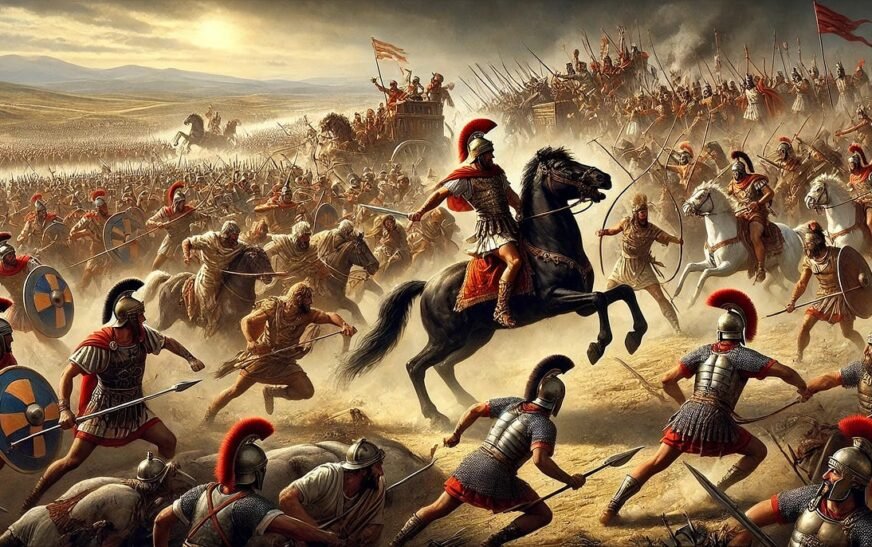
The Battle at dawn, the Sikh forces attacked from multiple sides. The battle was fierce and short. Despite desperate resistance, the small band was overwhelmed by artillery and numbers. Syed Ahmad Shaheed fought in the front lines. Historical sources agree he was martyred along with his close companion Shah Ismail Shaheed.
Their bodies were never found separately — locals buried them together on the spot. That is why the shrine in Balakot is visited to this day. People from across KP, GB, and beyond come to pay respects, especially on his Urs.
The Battle of Balakot was not a military victory. But in the narrative of South Asian Muslims, it became a symbo of Sacrifice: Syed Ahmad chose to stand against a powerful empire instead of accepting subjugation.
For later movements, including the Pakistan Movement, he became a reference point of resistance. His movement tried to cleanse religious practice and unite Muslims beyond caste and region — an idea that influenced Deobandi and Ahl-e-Hadith schools.
In Hazara, elders still tell stories of how villagers hid mujahideen, gave them food, and how the mountains “witnessed” the battle. This town of Balakot was largely destroyed in the 2005 earthquake and rebuilt.
But the mazar of Syed Ahmad Shaheed and Shah Ismail Shaheed remains a central landmark. Every year, religious and political groups hold gatherings there to remember the “first organized jihad movement” against colonial-era powers in the region. Historians debate the politics and outcomes of the movement. But for many in Pakistan, especially in KP, Syed Ahmad Shaheed represents conviction — a man who left comfort in India, came to the mountains, and died fighting for what he believed. Elders said “He came as a guest, and he stayed forever in our soil”.
Read also:16 employee Injured as Punjab University bus plunges Into ravine near Balakot