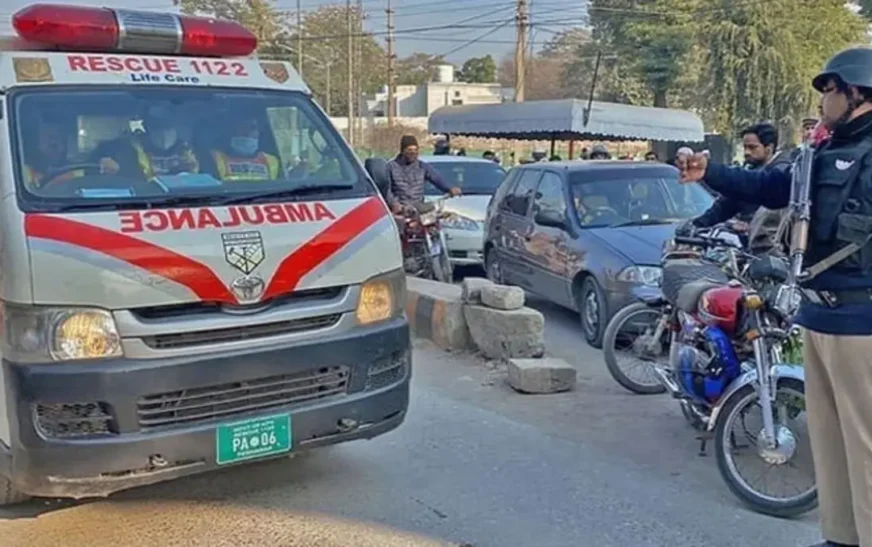

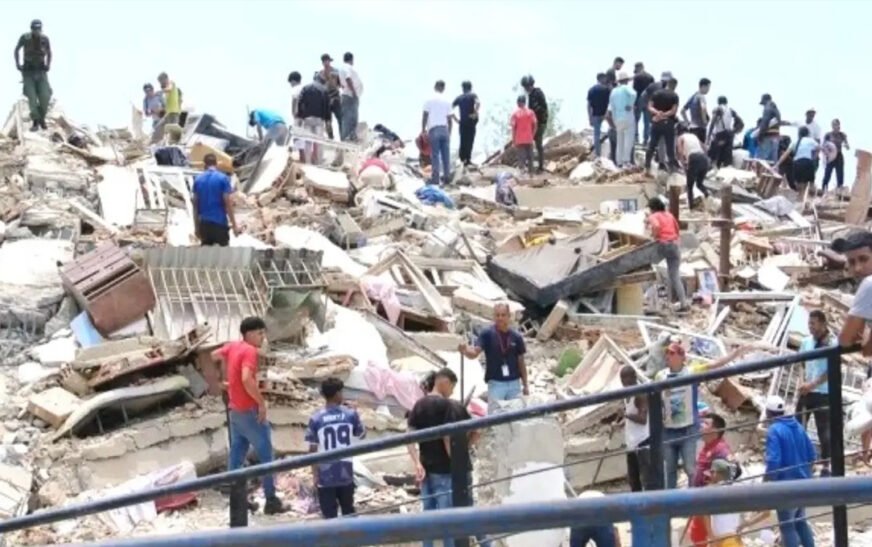
A powerful 7.4 magnitude earthquake shook western Colombia, killing at least 164 people and leaving entire neighbourhoods in ruins.
The quake struck just after 7:30 a.m. local time, with its epicenter near San Jose del Palmar in the remote Choco province on the Pacific Coast. Within seconds, the ground heaved across nine departments and all 32 departmental capitals. In Bogotá, alarms blared, and people rushed into the streets. In Cali, Colombia’s third-largest city, at least 20 buildings came down, including part of a hospital.
In Pereira, in the heart of the coffee region, rescue workers clawed through rubble by hand searching for survivors as the death toll climbed. President Abelardo De La Espriella, who had only been sworn in days earlier, went on national television to declare a state of emergency. He said the government’s first priority was pulling people out from under collapsed homes and buildings.
A unified command post was set up to coordinate aid, but in Choco, communications were cut, and some villages still had no cell service hours later. The governor there reported 132 dead and thousands injured in the largely rural area.
More than 1,500 homes and over 60 buildings were damaged or destroyed. Airports in six cities Pereira, Manizales, Quibdó, Armenia, Cartago and Buenaventura were forced to close after runways and terminals were hit.
Hospitals reported being overwhelmed. By Monday night, officials said more than 2 million people had been exposed to very strong shaking, and the U.S. Geological Survey warned that fatalities could rise sharply because many structures were poorly built. The scenes were painfully familiar. Just weeks earlier, twin earthquakes in neighbouring Venezuela had killed more than 6,300 people. Now Colombia faced its own crisis.
In Bogotá, Mayor Carlos Galán said the capital had escaped the worst, with only cracks reported in buildings and no confirmed injuries. But in the west, the story was different. Families gathered outside damaged homes in the rain, waiting for news.
Two major soccer matches and Colombia’s domestic league suspended all games for the week out of respect for the victims. There was no tsunami warning, because the quake was deep — about 66 miles underground — but the shaking was enough to be felt as far as Ecuador, Panama and Venezuela.
As night fell, rescue teams kept working with flashlights, and the government said it was deploying all available resources to reach remote communities.
For now, the count stands at more than 160 dead and dozens injured, but officials expect those numbers to change as crews reach areas cut off by landslides and damaged roads. It is already being called the strongest earthquake to hit Colombia this century.
Read also: Earthquake jolts Swat and adjoining areas