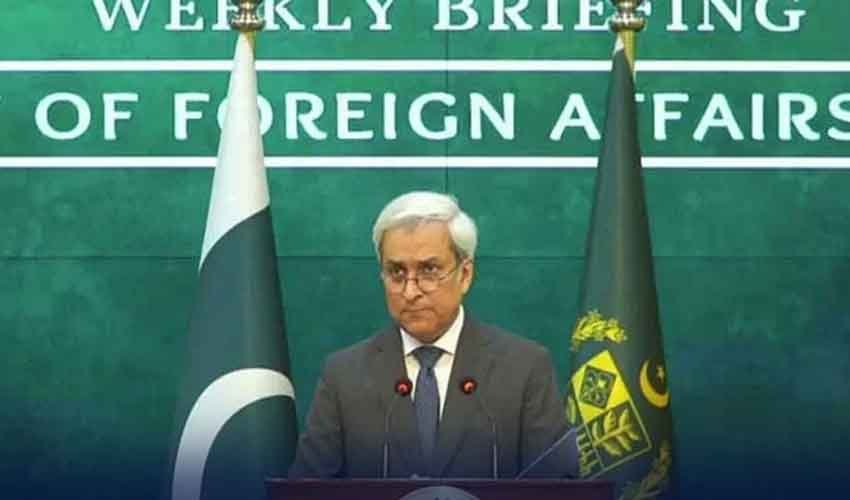

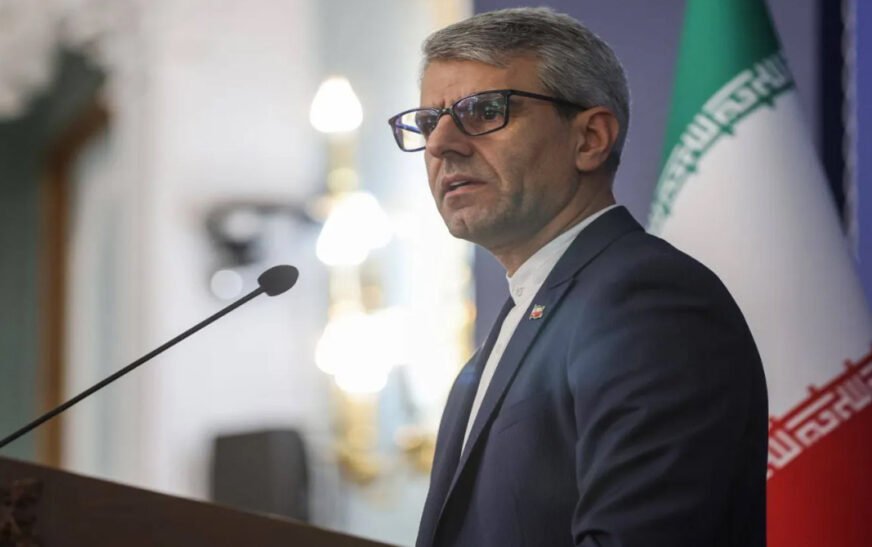
Iran’s Foreign Ministry spokesperson Esmaeil Baqaei says that diplomatic channels between Iran and America remain open, but Tehran’s overriding priority under current conditions is defending its sovereignty, territorial integrity, and people against the ongoing US war crimes.
Speaking in an interview with Austrian public broadcaster ORF, Esmaeil Baqaei was asked whether diplomatic channels between Iran and other parties remain open.
“Yes, they, the Americans, are exchanging messages,” he said. “But for Iran, the priority under current conditions is defending our sovereignty, territorial integrity, and protecting our people against the war crimes the United States is committing.”
Baqaei rejected the notion that hostilities had ceased, describing the current military situation as a continuation of the illegal war that began on February 28. He recalled that Iran had entered negotiations in good faith and succeeded in reaching a Memorandum of Understanding on ending the war on all fronts.
“But what happened was that the United States, from the very first days, shirked its obligations under various pretexts,” he said. Under Article 5 of the MoU, Baqaei explained, a 30-day period was envisaged for restoring commercial shipping traffic in the Strait of Hormuz to pre-war conditions. Iran, he said, fulfilled all its obligations to facilitate safe passage of vessels.
However, on the 21st or 22nd day after signing, the United States launched “a massive military aggression against Iran on the pretext of incidents against commercial shipping in the Strait.”
Addressing questions about disruptions to maritime traffic, Baqaei pushed back firmly against suggestions that Iran bears responsibility.”We have acted in good faith for decades. We have been the guardians of security in the Strait of Hormuz and the Persian Gulf for many years,” he said. “The incidents that occurred in the Strait were not caused by Iran’s actions. All this turmoil is the result of US and Israeli aggression that began on February 28.”
He argued that the aggressors had exploited the strait as a corridor to attack Iran, making it impossible for Tehran to treat the waterway as if nothing had happened. “Iran cannot allow the Strait of Hormuz to become a tool for aggressors to harm our national security again and again,” he warned.
IRGC Political Deputy General Javani says Iran emerged stronger after the third imposed war, including dominance over the Strait of Hormuz. Baqaei also addressed the issue of Iran’s frozen assets, expressing frustration at misleading media framing.
“They had committed to releasing Iran’s frozen assets. I emphasize again that this money belongs to us; it does not belong to America,” he said. “Sometimes mainstream media creates the impression that the United States is going to pay financial aid to Iran, but that is not the case. These are our own assets that have been illegally blocked for years.”
He confirmed that all progress on this file had stalled following the resumption of hostilities. Despite the repeated violations, Baqaei insisted Iran remains open to genuine diplomacy, but drew a sharp distinction between negotiation and capitulation.
“We have never fled from the negotiating table, because we know we are fighting for our legitimate rights. For us, the negotiating table has exactly the same value and status as the battlefield,” he said.
“But negotiation in the true sense of the word, not negotiation aimed at dictating or imposing demands. We will certainly not accept such negotiation.” Iran stresses the need for renewed efforts to achieve a just resolution to the Yemeni crisis and prevent further instability in the region.
He noted that this marks the third time in the past year that Iran has been attacked while engaged in talks. “Twice before, while we were negotiating, we were attacked by the US and Israel. This time too, after signing the MoU, which the President of the United States himself signed, they violated the same agreement.”
In some of his sharpest remarks, Baqaei directed criticism at European nations, accusing them of a long record of broken commitments and moral compromise. “Honestly, I believe Europeans owe a great debt to Iran,” he said. “They did not fulfill their JCPOA obligations from the very beginning. When the US withdrew from the JCPOA, we waited one year… but Europeans failed to meet their commitments, not because they lacked the ability, but because they chose to pursue a policy of appeasement toward the United States.”
He pointed to the worst betrayal: European countries supporting and endorsing the joint US-Israeli attacks on Iran, as well as their role in triggering the so-called “snapback” mechanism at the UN Security Council.
“Appeasement of a bully never immunizes anyone from his aggression,” Baqaei said. “It only makes him bolder.” Turning to questions about Iran’s human rights record, Baqaei questioned pervasive Western hypocrisy.
“We have never claimed to be flawless. Europeans should be humble enough to accept that they are not perfect either and cannot preach to others while committing the same crimes or at least supporting them and remaining silent before the horrific genocide in occupied Palestine,” he said.
“They cannot lecture Iranians about human rights. They cannot pretend to be concerned about the execution of one or two criminals while remaining silent before the killing of Iranians, including Iranian children, students in Minab, Lamerd, and other areas.”
In his closing remarks, Baqaei questioned whether the international legal order retains any meaning in the current environment. “The entire structure of international humanitarian law has been sacrificed,” he said. “You can no longer speak of international humanitarian law when the US Secretary of War says: ‘There will be no quarter, no mercy, and no cumbersome rules of engagement.'”
He challenged European governments directly, “If Europeans truly believe in what they claim about the rule of law and international humanitarian law, and remember, Switzerland is the depositary of the four 1949 Geneva Conventions, why did they choose to remain silent before America’s threat to blow up Iran’s bridges and power plants?”
The war began on February 28, 2026, when the United States and Israel launched unprovoked strikes on Iran, assassinating the Leader of the Islamic Revolution and targeting nuclear facilities, schools, and hospitals. Iran responded with Operation True Promise 4, launching over 100 waves of retaliatory strikes, before a Pakistan-brokered ceasefire took effect on April 8.
A Memorandum of Understanding was subsequently signed to end hostilities on all fronts, but Washington resumed large-scale military operations within three weeks, citing unsubstantiated claims of threats to shipping in the Strait of Hormuz.
This marks the third time in the past year that Iran has been attacked while engaged in negotiations, reinforcing Tehran’s position that Washington treats diplomacy as a cover for military preparation rather than a genuine path to peace.
Read also: Iran will not accept Intimidation or greed: Iranian Foreign Minister