
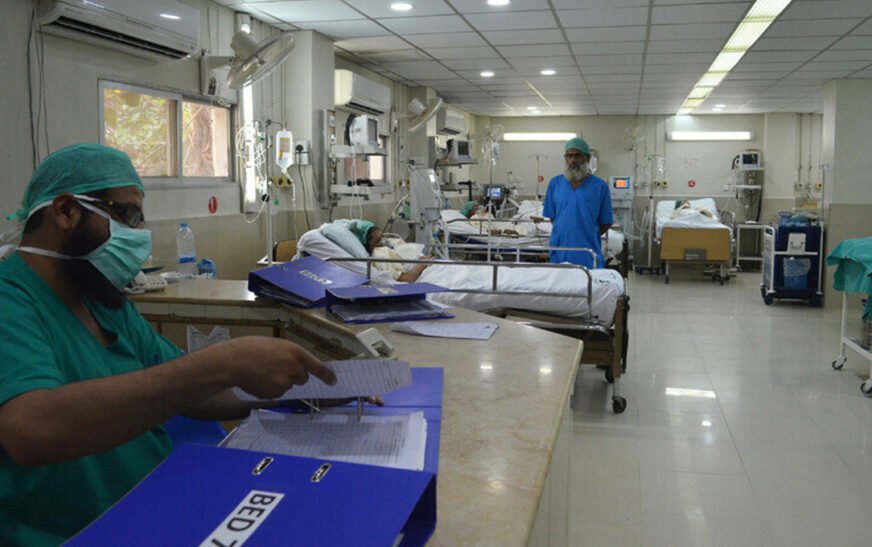
PESHAWAR: Internal divisions have surfaced within the PTI-led Khyber Pakhtunkhwa (KP) government over its policy to outsource public hospitals, after a ruling party lawmaker publicly opposed the move in the provincial assembly.
according to Mashriq TV report, MPA Ubaid-ur-Rehman had filed a notice for “call attention” about the “possibility of privatization and outsourcing of government-owned healthcare institutions.” The lawmaker pointed out not only inefficiencies of the policy, but also lack of transparency associated with the decision to go forward with the policy.
“Some of those public hospitals which are already under the outsourcing contract have not yet shown any signs of improvement in performance,” he added. He also warned the authorities about negative consequences of handing over control of public hospitals to private institutions.
The lawmaker highlighted that there has been rapid outsourcing of public hospitals since last year, adding that the results were “controversial and unsatisfactory.” In his remarks, he specifically mentioned the Tehsil Headquarters (THQ) hospital in Lower Dir where there was “no or negligible improvement in standards of healthcare facilities.”
He urged the authorities to carry out an assessment of their policy and make information related to it transparent to all concerned. “The people must be made aware of how these decisions are made and their effects on the society,” he stated.
The complaint shows that there is a growing discontent among those in the administration as the province keeps pushing forward with health reforms. Although the government officials have claimed that the policy would enhance the process of delivering services, the opposition suggests a tough future for it.
Shafi Jan: Provincial economies suffering due to federal economic failures
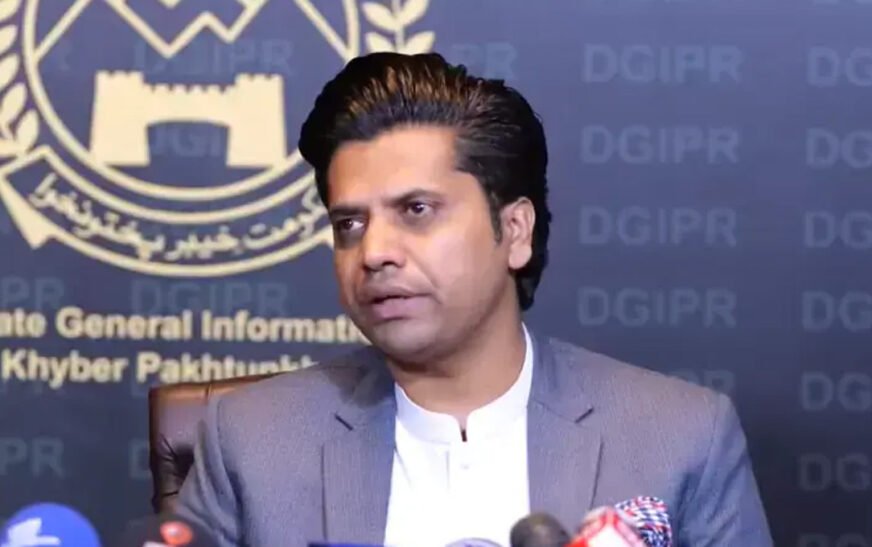
Earlier, Special Assistant to the Chief Minister of Khyber Pakhtunkhwa on Information and Public Relations, Shafi Jan, has strongly criticized federal economic policies, stating that the government is now overwhelmed by mounting debt. He termed the surge in national debt to Rs. 79.9 trillion within just eight months as deeply alarming.
He noted that escalating debt-servicing costs have severely strained national resources, with interest payments now exceeding the combined allocation for defense and development spending.
Shafi Jan further stated that rising tensions in the Middle East have added another layer of complexity to Pakistan’s fragile economic situation. He attributed the increase in oil and fertilizer prices to flawed federal policies, warning that both agriculture and industry are now under intense pressure.
On revenue performance, he said the Federal Board of Revenue has failed to meet its targets, while the tax-to-GDP ratio remains stagnant. He added that monetary policy challenges have intensified for the State Bank, and the country’s economic direction appears increasingly uncertain—pushing Pakistan deeper into crisis.
He maintained that during Imran Khan’s tenure as Prime Minister, the economy remained stable, industries were operational, and job opportunities were expanding. In contrast, he said, the current federal government has presided over a fresh wave of inflation and a worsening energy crisis, further eroding the purchasing power of ordinary citizens.
Shafi Jan further stated that the burden of federal economic failures is now being shifted onto provincial economies, with direct and adverse implications for provincial development projects.