
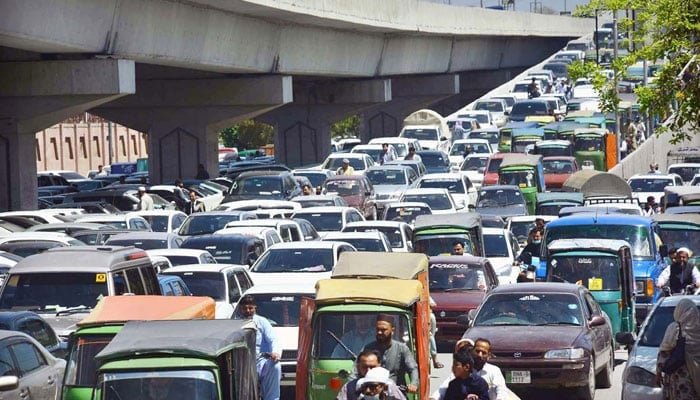
PESHAWAR (Taimur Khan) Already burdened by severe traffic congestion caused by thousands of illegal and unregistered rickshaws, residents of Peshawar are now questioning the Khyber Pakhtunkhwa government’s decision to introduce an additional 10,000 electric rickshaws without any feasibility study or stakeholder consultation and with heavy subsidies.
According to official sources, the KP government plans to provide 10,000 electric rickshaws on subsidy through the Bank of Khyber. Each rickshaw costs Rs1.3 million, of which the government will pay Rs300,000, amounting to a total subsidy of Rs3 billion. The remaining Rs1 million will be recovered from beneficiaries in instalments over four years.
The Transport Department has been directed to submit three different proposals to the Bank of Khyber regarding beneficiary selection and distribution mechanisms, one of which will be approved by the Chief Minister.
Documents show that these electric rickshaws are intended to operate in University Town, University of Peshawar and Hayatabad.
However, a key concern remains unresolved: the government lacks authentic data on the existing number of rickshaws in Peshawar, how many are registered or unregistered, and whether there is any actual demand for additional rickshaws in the city.
During the tenure of former Chief Minister Ali Amin Gandapur, the provincial cabinet had decided that no new rickshaw-related policy would be introduced until a comprehensive survey was conducted.
This decision followed glaring discrepancies in official records; one department estimates around 35,000 rickshaws in Peshawar, while another puts the figure as high as 250,000. As a result, the Planning and Development Department assigned a private consultant to conduct a detailed survey.
Separately, on June 10, 2025, a memorandum of understanding (MOU) was signed between the Science, Technology and Information Technology Department and the University of Engineering and Technology to convert existing rickshaws to electric and import new ones. So far, only six rickshaws have been converted.
During a meeting chaired by the Additional Chief Secretary (Planning and Development), it was suggested that the Transport Department expand the project province-wide. However, then Transport Secretary Masood Younis opposed the move, insisting no project should proceed before completion of the survey.
Further raising questions is the provincial government’s decision to ban all forms of public transport on BRT routes, intensifying concerns about traffic management and the rationale behind adding thousands more rickshaws to already congested roads.
Sources claim that in January 2026, the Chief Minister ordered the distribution of 10,000 electric rickshaws within just 21 days, without consulting the Transport Department, conducting surveys in the designated areas, or assessing the availability of charging infrastructure.
No feasibility study was carried out, and no stakeholder consultation took place before issuing what officials describe as a “hasty directive.”
Efforts to obtain the Transport Department’s official version proved unsuccessful, as Transport Secretary Zubair Khan did not respond to queries sent to him by this reporter.
The decision has sparked growing concern among citizens and experts alike, who warn that without proper planning, data, and infrastructure, the move could worsen Peshawar’s traffic woes rather than provide a sustainable transport solution.